Pottersville Revisited
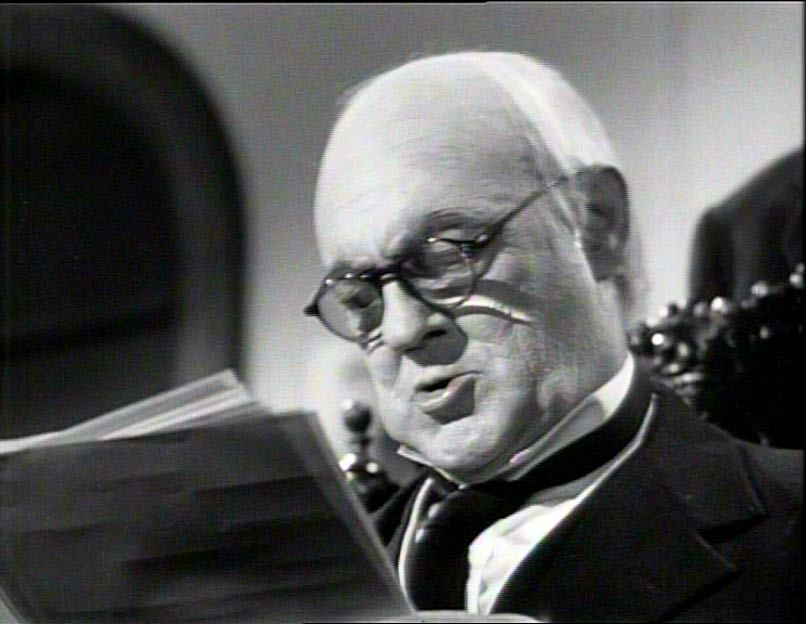
A few nights ago, as I was watching It’s a Wonderful Life for about the twenty-third time (I’m still not sure if partial viewings count toward the total), I paid special attention to the part where George Bailey finds himself in Pottersville. This nightmarish sequence, lovingly arranged by George’s guardian angel, has burned itself into our collective memory. Today it seems more relevant than ever.
Where exactly was Pottersville? It occupied precisely the same space as George’s hometown, Bedford Falls. It even looked vaguely like Bedford Falls. But instead of a wholesome little burg filled with characters Norman Rockwell might have painted, the town had morphed into a dark and seedy sinkhole of vice, cruelty, fear and alienation. Why? Because George Bailey — the earnest, ever-striving, ever-frustrated hero — had never been born. And his absence allowed the resident plutocrat, Mr. Potter, to spread his tentacles over every last enterprise in town.
Most of us have come to regard this eternal Christmas classic as a study in good versus evil, of community spirit versus capitalistic greed. It’s a tale about the virtuous “little guy” bravely fighting corrupt private interests, in unambiguous black and white.
And yet… it turns out that director Frank Capra was a staunch Republican who routinely voted against FDR. Jimmy Stewart, almost indistinguishable in real life from George Bailey except for his spectacular Hollywood career, was a veteran Republican, too. And let’s not forget that George Bailey himself was an active practitioner of private enterprise. So maybe It’s a Wonderful Life isn’t quite the anti-capitalist screed some of us have come to believe it is.
Here’s what I think Capra is telling us: there are good capitalists and evil capitalists… capitalists who enrich the community and capitalists who enrich themselves at everyone else’s expense. When the latter breed of capitalist is allowed to triumph, the result is Pottersville — in short, economic and spiritual devastation for the “99 percent.”
Moral of the story: The good capitalists — the George Baileys of the world — are indispensable bulwarks against the unrestrained greed and ruthlessness of the big-money interests. In short, the George Baileys have to prevail or we’re toast.
Am I sounding a call to arms for America’s moderates? You bet I am. Capitalism and its rewards have been shifting inexorably away from Main Street toward Wall Street. The Mr. Potters have seen to that. Now it’s time to fight back… to revive Main Street and cage the wild beast that is Wall Street. Moderates have to play a pivotal role in the struggle of the 99 percent against the 1 percent, or we could be in for some epochal ugliness in the years ahead.
As I write this, in the closing month of A.D. 2011, the great American middle class has been ravaged by chronic corporate downsizing and outsourcing. The “job creators” refuse to create jobs even as they sit on overstuffed cushions of cash, and their unapologetic greed is generating rancorous rumblings among the masses. The fortunate few live like Bourbon aristocrats while the rest of us watch our nest eggs crack and ooze ominously. College tuitions have soared so high that only rich kids can emerge from their four-year adventures without decades of debt dangling over their futures. And of course the poor are suffering as much as ever, with this one important difference: they have considerably more company now. That fellow living out of his car down the street used to be a contender.
To make matters worse, Wall Street and its media mouthpieces have hypnotized millions of ordinary folks into believing that unfettered corporatocracy is good for them. (Never underestimate the power of patriotism, religion, freedom and taxation to convince Middle Americans that they should cheer for the elite.)
The Republican front-runners for the 2012 presidential nomination have been a succession of clowns and robots, growing progressively nuttier in their pronouncements before their campaigns implode. But they keep coming at us. The thought that one of them might actually stumble across the finish line should be enough to wake all moderates from their slumber.
 Now that Herman Cain’s quirky campaign has self-destructed, the laurel wreath of GOP leadership has descended upon the oversized head of Newton Leroy (yep, you can look it up) Gingrich. Almost a caricature of the arrogant ruling-class apologist, Gingrich has gained notice — not all of it positive — by mocking jobless “Occupy Wall Street” protesters and calling for child labor in poor communities. The ultimate Beltway insider, Newt has made a fortune playing for both sides of the K Street-Congress power axis. Yet he’s imaginative enough to position himself as a maverick in his race for the White House. (Remember, the Tea Party is supposed to be a grass-roots movement of ornery outsiders, and Newt plays the role like a pro.)
As a radical moderate, I believe that a Gingrich presidency would be unhealthful for most living things. The man still faces long odds, of course, and chances are that his wayward tongue will eventually trip him up. He’s compelling as a speaker and pontificator, but he’s not easy to like: cocky, bullheaded and unsympathetic — especially with his legacy of having divorced his first wife while she was bedridden with cancer. He surprised a lot of us when he stood up for illegal immigrants who have led blameless lives in this country… but a cynic would dismiss his high-minded overture as a calculated appeal to moderates, whose votes he’ll have to lasso if he wants to capture the presidency. He’ll have to convince those moderates that he’s not the reincarnation of Mr. Potter.
But I’m convinced he is. And it all boils down to this: the George Baileys among us need to rouse ourselves to action and defeat the Mr. Potters before they defeat us. We need to regulate the excesses of Wall Street, force corporations to put ordinary employees on their boards, and — most important of all — break the sinister and mutually lucrative alliance between lobbyists and our elected representatives. We’ll break it by Constitutional amendment if possible, by civil unrest if necessary. But break it we will, even if it means evicting every incumbent from the halls of Congress. The current arrangement cannot stand if we’re to continue describing our nation as a democratic republic. I don’t know about you, but I have no intention of spending the rest of my life in Pottersville.
Who’s Afraid of Grover Norquist?
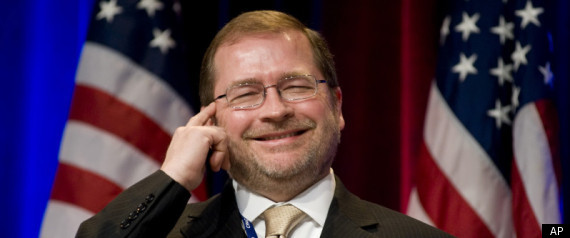
How did a stubble-faced lobbyist with minimal name recognition beyond the Beltway become the godfather of the American Right, the scourge of RINOs, the maker and destroyer of political careers? Why did Senator Alan Simpson of Wyoming call Grover Norquist the most powerful man in America? Who IS this guy, and why is everyone afraid of him?
When you see him interviewed on television (he appeared on 60 Minutes this past weekend), Grover Glenn Norquist doesn’t inspire terror. If anything, he might remind you of a more self-possessed George Costanza, the hapless but eternally resolute second banana from Seinfeld. Plump-faced and effusive… same feline grin, eyes narrowed as if to purr… same air of nervy self-satisfaction while savoring a borderline-illicit triumph. He even sounds like Costanza, minus the New York accent. And no writer of fiction since Dickens could have conjured up a more fitting name for a wonkish power broker. Grover Norquist… he’s just too good to be true.
Norquist has never held public office. A child of relative privilege — son of a Polaroid VP and the bearer of two degrees from Harvard — Norquist insinuated his way into the Reagan administration back in the money-mad 1980s. The Gipper entrusted him with the birthing, care and feeding of a new organization — Americans for Tax Reform. This fledgling activist group was supposed to embody Reagan’s small-government philosophy, but under Norquist’s stewardship it grew into a monster… a take-no-prisoners anti-tax lobbying group with tentacles that gradually spread across the political landscape of the republic. The stranglehold persists to this day, to the extent that any Republican candidate with a whiff of moderation about him can forget about winning a GOP primary. Norquist sees to that.
What does he believe in? Quoth the redoubtable Mr. Norquist: “I don’t want to abolish government. I simply want to reduce it to the size where I can drag it into the bathroom and drown it in the bathtub.” We get the picture. In more wonk-friendly terms, Norquist wants to shrink the federal government to a mere eight percent of GDP — approximately where it was during the McKinley administration, before income tax, Social Security, welfare, Medicare and other Democratic aberrations ruined everything for the fiscal tightwads in our midst.
As you might suspect, Grover Norquist is a devout libertarian, a man so fiercely opposed to government spending that he managed to cajole or coerce 279 (count ’em!) current members of the House and Senate (that is, nearly all the sitting Republicans) into signing his notorious “pledge.” What sort of pledge? Simply this: I will never agree to raise taxes at any time, for any reason whatsoever.
Every one of the current GOP presidential candidates has signed the pledge — with the notable exception of Jon Huntsman. (And we wonder why poor Huntsman, the appealingly “normal” Marilyn Munster of this grotesque crew, ranks dead last with Republican voters.) Every Republican on the farcical debt-reduction “super committee” was a confirmed Norquista. No surprise there, given their flat refusal to raise taxes on the rich or close loopholes during an earthshaking deficit crisis. After all, what’s the future of the country compared to an oath administered by a powerful lobbyist? For these stooges, the question was a no-brainer.
It’s as if half our lawmakers are walking around, zombielike, with a secret red “N” tattooed somewhere on their persons and an electronic chip implanted in their brains. Or maybe they’ve been replicated by pods from outer space, their renovated souls menacing, alien and strangely numb. This isn’t Eisenhower’s GOP. It’s not even Reagan’s GOP. The party of Lincoln now belongs to Norquist.
Of course, Norquist himself would pooh-pooh the notion that he’s in charge. He’s merely the facilitator, he’d insist. In his 60 Minutes interview with Steve Kroft, Norquist denied wielding personal power over the representatives who signed the pledge. No, “the tax issue is a powerful issue,” he countered, dismissing his reputation as a power-mad dictator. In the Gospel According to Grover, the representatives are responsible solely to the constituents who elected them. If they vote to raise taxes, they’re breaking their oath to the voters. And if they break that oath, Norquist simply uses his group’s vast financial resources to ensure that they never return to office.
During his interview with Norquist, Steve Kroft distilled this system into two pithy sentences: “If they sign the pledge and break it, they’re toast. And if they don’t sign the pledge, they’re toast.” Replied Norquist: “Ah, but if they sign it and keep it, they win the primary, they win the general [election], and they get to govern. And I make all this possible.” (Contented grin.)
Right now, at least 37 Republican lawmakers are expressing “buyer’s remorse” over their pledge. After all, some of them signed it back in the 1990s, an era of optimism and prosperity that, in retrospect, looks more and more like a lost Golden Age. In fact, a recent Gallup poll revealed that only 26 percent of Republican voters are in favor of freezing taxes under all circumstances. But try telling it to Grover.
For Norquist, Republican consistency on the tax issue is the same as establishing and maintaining a commercial brand. He compared GOP politicians who raise taxes to rats’ heads found in Coke bottles. One of those self-confessed “rats’ heads,” the aforementioned Senator Simpson, describes the Norquist philosophy as “no taxes under any circumstances even if your country goes to hell.” A Republican and a proud pledge holdout, Simpson fears no retribution. (O Norquist, where is thy sting?) More of his fellow Republicans should follow the old man’s example. Instead, the remorseful ones have been begging Norquist to release them from their pledge.
How piteous… how undignified… how disgraceful when you think about it… and how totally characteristic of American politics in our broken-down era. The fringe has succeeded in terrorizing the mainstream. Members of Congress are cowering before the shadow of a freak-show ringmaster, a mere lobbyist. Yes, Norquist has the financial support to drive them out of office by running well-funded tax purists against them. But what’s a single lobbyist against thirty-seven elected representatives who want to reverse course on taxes during a crisis?
If they had any backbone among them, those thirty-seven sensitive souls would unite. They’d persuade more of their colleagues to join them. Then they’d confront Norquist en masse, make him sweat… and heave the S.O.B. out of Washington.
But chances are they won’t, and then Norquist will enjoy the last laugh. He’ll smile that feline smile and cackle contentedly to himself as he crosses their names off the list of the living. He’ll start to look a little less like George Costanza and a little more like Seinfeld’s diabolically demented neighbor down the hall. Yes, Newman will be running the United States government.
The New Moderate Attempts to Digest the Penn State Scandal
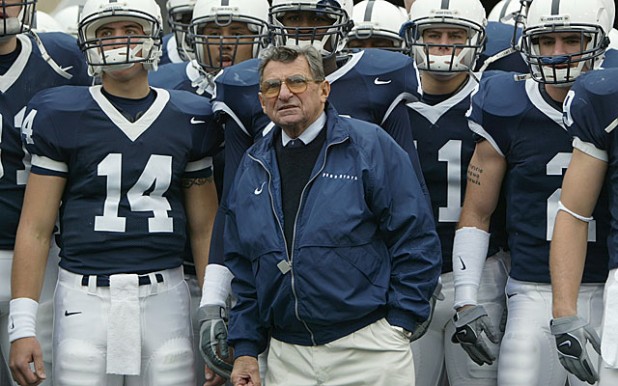
One of the most illustrious “brands” in American college football abruptly imploded last week, taking with it a university president and a fabled coach who will never again enjoy the cheers of multitudes. That much is sad enough. We’ve also heard that the lives of at least nine boys (or former boys) have been ransacked and polluted, possibly beyond repair. If the accounts are true, the man who perpetrated the assaults is a fiend of the lowest order. (You don’t hear the word “fiend” bandied about much these days; I think we should use it more often.)
In the days since the awful story broke like a gargantuan ten-year-old egg spewing its putrid contents across the national consciousness, I’ve had some time to think about the lessons to be drawn from it. Of course, nobody loves a writer who promises paragraph after paragraph of moral edification. Instead of writing a treatise, I’ve distilled my thoughts into a dozen brief reflections on the scandal that stopped America in its tracks.
1. A lifetime of greatness can be nullified by a single mistake. Joe Paterno spent more than 60 years building his legacy at Penn State, 46 of them as the beloved head coach of a legendary football program. I’ve always found it tragic that a lifetime of effort can be undone by a single lapse, and the case of “JoePa” is no exception. By all accounts a decent and down-to-earth man who transformed countless lives for the better, Paterno was adhering to university dictates when he informed his boss about the alleged sexual assault by former assistant coach Jerry Sandusky. Yes, he should have delved into the details, confronted Sandusky in person and made sure he would never harm a child again. That would have been the ideal response… and who among us can say why he let the opportunity slip away? Instead, JoePa’s buck-passing cost him his job and his aura of greatness — a sad, inglorious finale to an otherwise glorious career.
2. Did Paterno really deserve to be fired? Wouldn’t a slap on the wrist have sufficed? At the very least, shouldn’t he have been entitled to a hearing? At first I thought the university went overboard when it abruptly sacked him (over the phone, no less). Paterno didn’t witness a crime, after all. He heard about it second-hand from a graduate assistant (more about him later). How could he have called the police on the basis of hearsay? But Paterno may have known more than we’ve been led to believe, and the university felt that a thorough housecleaning was in order. The final solution was quick, deadly and probably the most effective way for Penn State to cleanse its image as quickly as possible. The brand had to be protected, even though that brand was built by the man they fired.
3. I can understand why Penn State students rioted. Penn State is more than a football school these days… over the past half century PSU has steadily climbed in the national rankings for academic quality. But football — and the gobs of money it generated — had a lot to do with that newfound academic lustre. Penn State students honestly believed that a deity with an Italian surname was living in their midst. When the university canned him so ignominiously, it was as if their own father had been carted off by the cops. Skeptics would suggest that college students shouldn’t live and breathe football, but try telling that to the faithful in Happy Valley.
4. Left-leaning critics had a field day bashing Penn State. Twitter was full of snide references to those ghastly Penn State students who rioted in the wake of Paterno’s dismissal. “Just the level of intelligence you’d expect from students admitted to Penn State,” one of them sniffed. To those rarefied souls, Penn State represents everything they revile: rowdy, drunken, muscleheaded warriors whose crude energy mysteriously propels them to success in the business world. For blue-staters, PSU is a classic red-state university. I wonder when well-educated progressives will realize that their snootiness has driven a third of America into the clutches of right-wing populists like Sean Hannity and Rush Limbaugh.
5. Powerful conservative institutions generally deny wrongdoing. Like the Vatican, Wall Street and (to a somewhat lesser degree) Congress, the Penn State football program was a powerful entity intent on perpetuating that power at all costs. Tightly run, male-dominated organizations like these tend to become more and more conservative and inflexible over time. Success breeds defensiveness and even blindness to wrongdoing. All threats to the system must be deflected; no internal flaws can be acknowledged. Such organizations exist in a state of perpetual denial, and Penn State’s football program was true to form.
6. Nearly all the offenders in contemporary sex scandals (and even financial scandals) are men. Most of them are oversexed males drunk with power and testosterone. Clinton, Schwarzenegger, John Edwards, Eliot Spitzer, Anthony Weiner… what they all have in common is a personal tool that won’t stay put. The few women who make tabloid headlines tend to be Hollywood nymphets or the occasional schoolteacher who entertains a horny adolescent. What is it about men today? Laggards in school… stupid in public conduct… pathologically reckless on Wall Street… I’m almost ashamed to admit I belong to their tribe. Scientists say the Y chromosome is gradually deteriorating over time, but the descent seems to be steeper and quicker than anyone would have expected. Whatever happened to character, honor, courage and other archaic male mantras from the Age of Chivalry?
7. Mike McQueary needs to be held accountable. He’s the former graduate assistant who allegedly witnessed Sandusky raping a ten-year-old boy in a Penn State shower and did nothing to stop the assault. I can understand a failure of nerve when walking in on a horror being perpetrated by one’s superior… he was probably dumbstruck. But all he had to do was clear his throat to make his presence known, say a few words to break up the assault (a naked middle-aged Sandusky in the shower couldn’t have posed much of a threat to the 6’2″ former quarterback), then yank the poor boy out of there and call the cops. Sandusky’s reign of terror would have ended in 2002 instead of 2011. Instead, a skittish McQueary bolted out of the shower room and waited until the next day to tell Coach Paterno. JoePa was fired; McQueary is simply on leave. Of course, it’s easy to be a Monday-morning quarterback… but a real quarterback would have acted more decisively.
8. What can we do about pedophiles? I don’t mean pedophiles who have committed crimes; that’s easy: we prosecute them and take them off the street. I mean people who are sexually attracted to children and find themselves tempted to consummate their wayward passion. Most of them probably have little or no control over their orientation. So do we force them to undergo therapy? (And would therapy make any difference?) Do we isolate them from society? Castrate them? Load them with drugs? Give them computer-animated kiddie porn to defuse their urges as harmlessly as possible? Whatever the means, we have to work on controling pedophilia before the pedophiles can act.
9. Pedophiles are spoiling it for men who simply enjoy being with kids. Children (most of them, anyway) are charming little people, and their companionship can be a tonic for world-weary souls. Helping young people grow and laugh and flourish also happens to be one of life’s most rewarding pursuits. Now, with pedophilia in the headlines, any man who consorts with kids for any reason is likely to be viewed with suspicion. And that’s a tragedy, because children need positive male role models outside the home. Do we ban all one-on-one contact between kids and their leaders? I’m afraid it might come to that, for everyone’s peace of mind.

Suspect Jerry Sandusky: did he love boys a little too much?
10. It helps to have friends in high places. Just ask Sandusky, who’s out on the street proclaiming his innocence (aside from a little “horseplay.”) The judge who let him go free on $100,000 bail was a volunteer with Sandusky’s Second Mile youth program.
11. The worst of it: Penn State simply told Sandusky to take his act elsewhere. When Joe Paterno’s higher-ups at Penn State heard the report of Sandusky’s brutal misconduct in the shower, did they call the police? Of course not. Did they at least notify the parents of the boys in Second Mile that their leader was up to no good? Try again. They ordered him to stop bringing boys to campus! In other words, they essentially advised him that he was free to indulge his unholy urges anywhere else. What were they thinking? Was their loyalty to Paterno’s onetime heir-apparent so steadfast that they simply winked at his extracurricular activities? Were they afraid that an arrest would tarnish the brand? More afraid of a little bad publicity than they were fearful for the safety of Jerry’s boys? This is the same “see no evil” policy that prompted so many Roman Catholic bishops to ship their wayward priests to other parishes… as if a change of scene might cure them. It doesn’t. It simply enables them to find new victims in new settings.
12. Money has become WAY too important in college football. I know, I know… if the schools can make all those megabucks from lucrative TV contracts and the like, what right do we have to stop them? It’s probably too late to stuff this musclebound genie back into its bottle, but I’d still like to see colleges (and Congress, for that matter) distance themselves from Big Money. The heavenly scent of dollars in the air has driven college football to some boneheaded decisions. Examples: Boise State just joined the Big East conference, while the core of the old conference (Syracuse, Pitt, West Virginia) jumped ship for other destinations. The “Big Ten” conference now numbers 12 schools, while the “Big 12” actually has ten. Rutgers, the birthplace of college football and my own alma mater, recently renamed its playing field High Point Solutions Stadium. (Is everything for sale?) Money has cheapened college football and swelled its head at the same time. What does all this have to do with the mess at Penn State? Simply that the stakes have become prohibitively high, and nobody is willing to risk all that glorious loot to save a bunch of innocent children from hell on earth.
Jon Huntsman and the Munsters
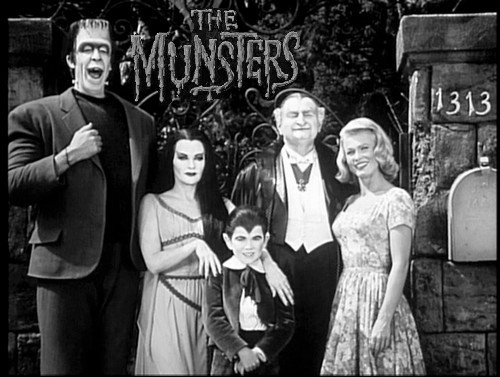
The Munsters: lovable in their vintage sitcom, but a little too much like the current crop of GOP presidential candidates. Guess which one is Huntsman?
Funny how the mind works: I was making preparations for Halloween earlier this week and ended up thinking about GOP presidential candidate Jon Huntsman. Let me try to explain the connection, because I assure you there is a connection.
I was filling a tray of goodies for the local trick-or-treaters when I started reminiscing about The Munsters. No surprise there. Everyone of a certain age remembers that short-lived ’60s sitcom about the endearingly ghoulish family who lived in the decaying mansion at 1313 Mockingbird Lane. There was Herman Munster, the goofball Frankenstein monster lookalike, and his vampirish better half, Lily. Her father, known simply as Grandpa, was a plump Transylvanian count who sounded something like former New York Mayor Ed Koch. The couple’s young son, Eddie, had vaguely pointy ears and a hairline that suggested latent werewolf tendencies.
Then there was Marilyn, a poor relation who happened to be a comely but otherwise conventional blonde of college age. The other Munsters pitied Marilyn. They confided to one another that such an ungainly lass would never land a boyfriend, but they treated her with the delicate respect that well-meaning souls generally reserve for the severely handicapped.
You can safely conclude that Marilyn was the least popular member of the cast. In fact, when the original Marilyn quit midway through the first season and another young blonde actress took her place, hardly anyone noticed. Everyone was so smitten by the more grotesque Munsters that poor Marilyn barely registered on the radar.
Now can you see why I started thinking about Jon Huntsman? It should be obvious: he’s Marilyn Munster. No disrespect to his manly credentials. No disrespect at all, in fact. It’s just that the current crop of GOP presidential hopefuls looks increasingly like a collection of monstrosities from the old Universal Studios back lot. Rick Perry, the hirsute Texan who denies evolution and makes George W. Bush look like a Fulbright Scholar. Herman Cain, the singing pizza tycoon with the gimmicky 9-9-9 plan and the badly handled sexual harassment rap. Slick Mitt Romney, the shape-shifting pod-person who never met a prinicple that couldn’t be modified for higher poll ratings. Then we have Ron Paul, the gnomish ideologue, the libertarian Yoda of the bunch. Newt Gingrich, about two-thirds as brilliant as he’d like us to believe, and even more ruthless. Rick Santorum, another fellow who gives us Ricks a bad name. And of course Michele Bachmann, who’s just too scary to contemplate. Excuse me while I pull the nearest blanket over my head.

Huntsman: Is he too normal to win Republican support in today's grotesque political climate?
Then we have good Jon Huntsman. A rational conservative with moderate tendencies… armed with a mindbogglingly impressive resume that includes experience as governor, corporate executive, ambassador and (can you believe it?) rock musician. Not a hyperpartisan. Worked for four presidents (three Republicans and Obama). Speaks Chinese. Not averse to science and evolution. Telegenic, sharp and articulate, with an engaging (if sometimes peculiar) sense of humor. A little too pro-business for my liking… but unquestionably a first-rate man, and exactly the kind of candidate the Republicans should be nominating.
So where do we find Jon Huntsman ranking in the current GOP polls? Dead last, of course, with between one and two percent support. With all those Munsters hogging the screen at the Republican debates, Hunstman looks too sensible, too bland, too Marilyn. He’s obviously out of his element… and, given the comically grotesque qualities of the other GOP candidates, you’d think that would be a good thing. But it’s not. How can he possibly compete with that Munsterish crew?
The Republican faithful are clamoring for someone who will let out a few war whoops and stir up the base. Huntsman is simply too rational, too intelligent, too normal, too genteel to rouse today’s foaming-at-the-mouth conservatives. Yep, he’s Marilyn Munster all right.
Just as Marilyn couldn’t vie for attention with the more outlandish members of her clan, Huntsman can’t seem to make himself heard over the squawking extremists, kooks and slickers who currently dominate the Republican field. And maybe that’s for the best.
After all, a presidential race between Obama and Huntsman would present thinking Americans (and especially moderates) with a real dilemma: the decent, intelligent, benevolent but hopelessly stymied incumbent versus the decent, intelligent, benevolent but relatively untested challenger from Utah. Both are devoted family men, members in good standing of the establishment, unlikely to galvanize us with outside-the-box remedies for our current ills. It would be a choice between two worthy but fundamentally conventional men. As I said, a real dilemma for thinking voters.
But run any of the other Republican hopefuls against Obama, and I’d shudder at the possibility that one of them could take up residence at 1600 Pennsylvania Avenue. (They’d fit in better at 1313 Mockingbird Lane along with Herman, Lily, Grandpa and Eddie.) I’d look past Obama’s rudderless leadership, his dithering, his lack of clout in Congress, his unkept promises, his emotional remoteness, his peculiar amalgam of liberal sensibilities and excessive coziness with Wall Street. Then I’d think about the alternative — a bona fide Munster in the White House — and wouldn’t hesitate for a second to press the button next to the name of our beleaguered president.
Qaddafi, Gaddafi, Gadhafi: No Matter How You Spell It, He’s D-E-A-D
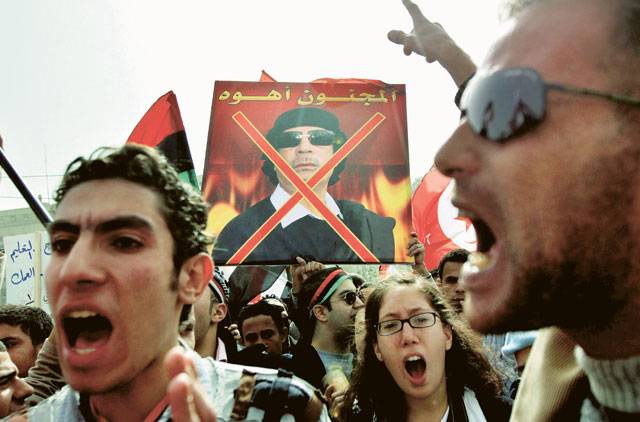
What can you say about a 69-year-old dictator whose own people felt the need to murder him? That he was vain and deluded? That he was pompous and vengeful? That he was lucky to have lasted 42 years as king of his hill? That he was, in the end, merely human and made of mortal flesh? The answer is “all of the above, and more.”
What more can we say about the deposed and summarily dispatched Libyan potentate Moammar al-Qaddafi/Gaddafi/Gadhafi/Khadafy, that man of multiple transliterations and personalities… that matchless Mad Dog of the Middle East (to use Ronald Reagan’s memorable phrase)?
Well, it seems he had a major crush on Condoleezza Rice. Found among the personal possessions at his imperial compound in Tripoli was an album filled with photos of the demurely fetching former Secretary of State. “I support my darling black African woman,” Qaddafi once gushed during a TV interview. “I admire and am very proud of the way she leans back and gives orders to the Arab leaders… Leezza, Leezza, Leezza… I love her very much.”
He proved to be an ardent suitor. During Rice’s state visit to Libya, Qaddafi presented her with a diamond ring and a locket containing his photograph, then treated her to a special viewing of his Condi Rice photo album. Ever the cool professional, Rice described the experience as “not standard diplomatic practice.”
What else can I tell you about the late Colonel Qaddafi that you might not already know? With a little help from Wikipedia and a few other sources, I’ve assembled the following fascinating facts:
- He was born in a tent on the Sahara sands — the Arab equivalent of a log cabin. One grandfather was a martyr in the struggle against Italian occupation; one grandmother was alleged to be (would you believe?) Jewish. Of course we never heard about the Jewish granny directly from Qaddafi, most likely because he was a devout anti-Semite.
- He attended his nation’s military academy at Benghazi — a ticket to social mobility for a desert Arab — and had attained the rank of lieutenant when he headed the bloodless military coup that overthew Libya’s King Idris in 1969. He was all of 27 at the time. Qaddafi immediately won a promotion to colonel, a rank he wore with pride throughout his years in power.
- After taking power, Qaddafi scrapped the old Christian calendar. He renamed July Hannibal after the ancient North African general who challenged Rome. August became the month of Nasser, in tribute to Egypt’s chieftain.
- He despised the native (and non-Arab) Berber population of Libya, which his scrambled mind somehow came to associate with foreign imperialism. After taking power, he made it illegal for Berbers to give their children traditional Berber names and outlawed the teaching of their language in schools. He moved them en masse from their native villages into specially constructed public housing.
- He counted among his friends and allies some of the vilest despots of his time: Uganda’s Idi Amin, Zimbabwe’s Robert Mugabe, Liberia’s Charles Taylor — even Serbian genocidist Slobodan Milosevic. If they were sufficiently evil, chances are they were FOM (Friends of Moammar). Imagine these international Goodfellas stepping out together for a night of bowling followed by a chummy killing spree. Whoever said it’s lonely at the top?
- He was a sartorial peacock who favored outlandish gowns and uniforms along with the ever-present sunglasses. He never traveled without his so-called Amazonian Guard, a crack coterie of Hollywood-glamorous female virgin bodyguards trained in the martial arts. (I’m not making this up.) But his favorite traveling companion was his Ukrainian nurse, a healthy-looking blonde who professes nothing but fond memories of her old boss. Their relationship was said to be strictly professional. As for the Amazonians, who knows?
- He started out as a proponent of Pan-Arabism, with his eyes on a united Arabia that would span the desert lands from Morocco to the Persian Gulf. When that dream fizzled, he set his sights on a future United States of Africa. (Give the man credit; he thought big.) In fact, just a few years ago he was crowned “King of Kings” by a consortium of more than 200 African tribal chieftains.
- He was afraid to fly over water and stayed resolutely on the ground floor when he traveled. Members of his inner circle noted that he wouldn’t climb more than 35 steps.
- He was known for making strange and sometimes incomprehensible public statements, once referring to HIV as “a peace virus, not an aggressive virus.”
- He declared a jihad against Switzerland last year, calling it an “infidel state” and urging the U.N. to partition it among France, Germany and Italy. (One of his sons had been arrested there and briefly detained after a hotel scuffle in Geneva.)
- He survived at least seven attempts on his life until his luck ran out while he hid in a drain pipe outside his hometown of Sirte. Despite all the gruesome video footage played repeatedly and almost zestfully by CNN and other networks, nobody captured the moment of his death. Word has it that he was shot with his own golden gun after being roughed up and pinned against a truck. His reported last words: “Don’t shoot!”

Don't call him Mr. Congeniality: Portrait of a defunct dictator
But what about Qaddafi’s politics? Where did the late “Dean of Arab Leaders” stand on the left-right spectrum… and did he even have a coherent political philosophy?
Like the man himself, Qaddafi’s political views defied conventional description. He was an ardent socialist who vastly improved his people’s healthcare, housing and sanitation through direct government intervention. Libyans enjoyed the best standard of living in all of Africa during his rule. At the same time, he personally siphoned the lion’s share of Libya’s oil wealth and kept it for his family — along with a tiny elite of close friends and associates. The state controlled the economy, and he controlled the state. In short, you might call Libya’s economic system a socialist kleptocracy — a strange melding of far left and far right, with nothing in between.
Make that an Islamist socialist kleptocracy. Unlike the secular Iraqi strongman Saddam Hussein, Qaddafi imposed a heavy (and mandatory) dose of Islamic faith and morality upon his people. Alcohol, gambling, homosexuality, adultery and casual public displays of affection were strictly verboten. He also believed in exporting Islam and defending it against all threats, real and imagined. He became infamous for his role in state-sponsored terrorism, from the dastardly Lockerbie bombing to gun-running for the IRA. He reveled in the prospect of an Islamic Europe.
Only after 9/11 did he soften his militant bravado, probably to avoid retaliation by the U.S. and its allies. (Smart man.) Then, as the Arab Spring swept across the deserts of North Africa, he turned against his own people. Refusing to surrender power, the aging dictator fought a bitter and ultimately futile civil war against the forces of democracy and change. These cockroaches!, he fumed as his people marched against him. Surely they must be on hallucinogenic drugs supplied by foreigners!
The old fox managed to evade his pursuers until they finally trapped him in that drainpipe near his birthplace. His last moments on this earth must have been a hellish blur of terror and stress hormones. Paradise seemed beyond his reach; he died stripped of all dignity, like a prize hog at the slaughterhouse. Allah-hu akbar!, his killers shouted when the deed was done. God is great!
It would be pleasant to think that the new Libya will emerge as a shining model of representative democracy, but I’m not ready to place any bets just yet. The manner of Qaddafi’s forced exit merely succeeded in turning my stomach.
“Occupy Wall Street” Not for Lefties Only

Moderates can cheer Occupy Wall Street, but let's make sure the ideologues don't commandeer the ship.
It’s starting to look like 1968 all over again. For three weeks now, the scruffy rebels have been marching, waving placards, camping out, obstructing traffic, denouncing the capitalists, dressing up as corporate zombies, getting themselves arrested and otherwise raising a good ruckus in Manhattan’s Financial District. And like those much-reviled money-changers of Lower Manhattan, they mean business.
An anti-corporate publication known as Adbusters orchestrated the “occupation,” and its rallying cry seemed reasonable to anyone in favor of clean government:
Beginning from one simple demand – a presidential commission to separate money from politics – we start setting the agenda for a new America.
What honest person could dispute the need to divorce politics from corporate influence? That much is a no-brainer. Of course, there’s the small matter of an obscure publication — and a Canadian one at that — demanding to set America’s agenda for us. I detect a distinct whiff of that old-time leftist penchant for deciding what the people “need” regardless of what they actually want. Still, it was time for somebody, anybody, to call for a radical departure from business as usual. Because the usual business was destroying us.
The Occupy Wall Street movement started modestly enough, with a much-ballyhooed September 17 rally that drew only a thousand or so ragtag believers to the once-obscure Zuccotti Park near Ground Zero. The mainstream media granted the “occupation” a few minutes of condescending attention during that uncertain first week, then tried to ignore it. But they couldn’t stop it. Like a laid-back Western edition of the Arab Spring, this revolution is being tweeted. It refuses to die despite the right-wing wisecracks about fuzzy goals, latte-drinking and bodily hygiene. In fact, the protest has been growing and gathering momentum as it snowballs along.
In “We Are the 99 Percent,”an online appendage of the Occupy Wall Street movement, individual protesters dramatize their woes with handwritten posters attesting to their staggering student debts, uninsurable illnesses, run-ins with banks and creditors, indefinite layoffs, seemingly endless (and fruitless) searches for work, bouts of depression, growing alienation and general fed-upness. It’s easy for some folks to snicker at these statements for their narcissism and bleating self-pity, but it’s impossible to deny that we’re looking at serious personal suffering as a result of a broken economy. These are authentic testimonials to a once-great nation in decline.

One of the melancholy personal testimonials from "We Are the 99 Percent"
Who exactly are the “one percent” that the “99 percent” oppose?
They are the banks, the mortgage industry, the insurance industry. They are the important ones. They need help and get bailed out and are praised as job creators. We need help and get nothing and are called entitled. We live in a society made for them, not for us. It’s their world, not ours. We are the 99 percent. We are everyone else. And we will no longer be silent. It’s time the 1 percent got to know us a little better.
The anger swells and spreads. Now we see legions of sympathizers staging their own anti-corporate rallies in cities from Boston to San Francisco. Trade unions have been joining the troops, eager to regain their macho mojo after decades of ignominious decline. Lefty show-biz tycoon Roseanne Barr appeared before the Wall Street crowd, literally calling for the heads of guilty bankers who refuse to surrender their ill-gotten gains and submit to “re-education camps.” (To one upstart cynic who called her out for her voluminous personal wealth, she angrily tweeted, “Not all rich r guilty including me-u commie.”)
Roseanne makes an important point, as much as I hesitate to agree with her about anything. The “Occupy Wall Street” crowd deserves the chance to vent its anger at the insolent, impenetrable fortress that is Wall Street today. But it needs to distinguish the malevolently rich from the merely rich, or we could be in for a mob-induced bloodbath. (See “French Revolution,” “Russian Revolution” and “Pol Pot” for further edification.)
The struggle shouldn’t be about class; it needs to be about corruption… about a self-entitled financial elite illicitly sucking money and hope away from the American middle and working classes until (as of 2007) the bottom 80 percent of the population controlled just seven percent of the nation’s financial wealth. (By contrast, the top one percent controlled 43 percent of the wealth.) It needs to be about the politicians who collude with that same elite, carrying out its predictably self-serving agenda as a reward for generous campaign donations. This sinister alliance needs to be broken by any means short of violence, it needs to be broken now, and the Occupy Wall Street movement might be just the instrument we need to restore some semblance of representative democracy to our distressed republic.
The movement’s official statement of purpose, while short on specifics, states its goal cleanly and crisply:
“We vow to end the monied corruption of our democracy.”
I’m fine with that, aren’t you? We need bands of righteous rebels to “occupy” K Street, that epicenter of lobbyist activity, and even the great-domed Capitol itself, where our puppet Congress holds sway over the nation’s laws. We can no longer count on our elected representatives to do the right thing; they’ll never vote to outlaw those plush corporate campaign contributions, and as a result they’ll never cut the strings that tie them to the nation’s plutocracy.
The people have to cut those strings for them. But not a mob… no rabid sans-culottes calling for the heads of the aristocrats. A presidential commission on corruption would be a good start. But given the current chief executive’s lack of clout in Congress we’ll also need an army of impassioned, upright, committed enthusiasts for an honest government and a fair society.
If you say you want a revolution, don’t think in terms of Lenin or even Lennon. Think Frank Capra. That’s right: let’s restore genuine representative democracy in the spirit of Mr. Smith Goes to Washington… let’s call for a decent, humane, radically reformed capitalism in the spirit of George Bailey’s Building & Loan.
Can you see why moderates need to get involved in the Occupy Wall Street movement? Most revolutions start with noble intentions and end up with a new (and invariably worse) set of oppressors. We can’t let our American Spring be dominated by left-wing extremists any more than we can allow our national politics to be controlled by right-wing extremists.
Good moderates everywhere need to wake up from their comfortable slumber, demonstrate for fairness in government and finance, and keep the Occupy Wall Street movement honest. We should tolerate no incitement to class warfare, no covert Marxist agenda… just a long-overdue restoration of government of the people, by the people, for the people.
And of course, I don’t mean one percent of the people or even 99 percent of the people. The only fair society is one in which everyone counts — even those infernal Wall Street bankers who gamed the system and drove our economy off the cliff. They just might have to take a seat at the bottom of the cliff with the rest of us.
What Do Moderates Want?
 Fairness. It all boils down to fairness. For me at least, being a moderate is about being fair, playing fair, and doing our damndest to ensure that society and its government are fair to those who dwell within it.
I like the idea of fairness as the foundation of any moderate movement. Fairness is a childlike principle; all kids seem to be born with an innate sense of justice. They know when they’ve been snookered, they don’t like it, and they generally demand restitution (though they don’t use that particular word).
We all know that life can be brutally unfair. Virtue, kindness, honor and sensitivity carry no advantages in the jungle. The amoral Darwinian gods continually seem to reward aggression, exploitation and cunning. The more enlightened members of our species agree that nature can be unfair, which is why the best and most successful societies have created governments that are, nominally at least, democratic and humane. In other words, fair.
Playing fair means making sure the deck isn’t stacked in favor of (or against) any class of people. It means you don’t tolerate secret schemes to fill the already brimming pockets of the rich… but you also don’t topple them from their penthouses simply because they are rich. It means you do what you can to help the poor escape from the abysmal sinkhole of poverty, but you don’t pay their rent for them or honor them with fancy perks denied to the struggling middle and working classes. You strive for balance. A fair society is a balanced society, a society without favoritism.
Political extremists would throw society out of balance if they had their way. They demand “fairness” for their own class without regard for the other classes, and now they’ve become more vocal and irresponsible than ever. They strut, they hurl insults, they long to crush the opposition. And they grow more myopic by the day.
If you’ve spent much time on Twitter or other social media lately, you’ll notice that the extremists have created their own convenient amen corners: they go there to confirm their prejudices and rally the troops. They nurse their pet grievances and rouse each other’s anger. They feed on this collective fury, like a fire feeding on pure oxygen; they grow huge and menacing.
This is how revolutions begin — the kind of revolutions that start with one aggrieved class spewing invective at another class (whom they typically perceive as less aggrieved)… the kind of revolutions that invariably trade one group of oppressors for another.
Meanwhile, the fair-minded moderates among us languish in oblivion. We might be more numerous than the lefties and righties put together, but we seem to lack focus, conviction, bravado. We’re not flashy or contentious, so we’re ignored. Most of the time, anyway.
Of course, we’ve grown accustomed to taking grief from both the left and right. We’re mushy, they tell us. We’re spineless and apathetic and rudderless. We have no agenda. We stick to the middle of the road because we’re too timid and thin-blooded to venture elsewhere.
And we’re afraid they might have a point. We know what we’re against: extremism. But what are we for… what are our guiding principles? What exactly do moderates want?
Fairness. That’s what we want. Above all, a true moderate longs for a society that won’t tilt toward the right or the left or any special interest at all.
We find ourselves outraged when we see our elected representatives collaborating with big-money interests, shamelessly accepting legalized bribes in exchange for political favors. It sickens us to watch our government grow fractious and dysfunctional, as hidebound partisans subvert our national welfare for the chance to demolish the opposition. We shake our heads as we observe the endless parade of American identity groups whose members seem to owe greater allegiance to their homogeneous “community” than to the republic. Hey, we want to shout, we’re all Americans here — or would you prefer to set up your own state?
We’re supposed to be a nation, a united and unified body of citizens with a common purpose. That doesn’t mean we all think alike, but it means we need to start thinking together. The United States is no place for nations within nations. Ben Franklin put it memorably in his pre-revolutionary cartoon of a snake dismembered into 13 parts: Join or die. Sounds vaguely menacing, but he knew how to communicate a sense of urgency.
For better or worse, moderates believe in cooperation. We’ve seen how petty factionalism can cripple our government (not to mention our finances), as our representatives bicker while the ship of state runs onto the rocks. Cooperation has broken down, perhaps irretrievably.
During times of emergency (and we’re living in such times), we moderates need to be a little less cooperative with the status quo and a little more cooperative among ourselves. We need to embolden ourselves, build some internal consensus, make more noise, rouse ourselves to action and grab the wheel from the extremists.
When the vessel has veered too far to the right, as it has lately… when the entrenched interests have rigged the system in their favor (and against everyone else) … we need to turn the wheel sharply to the left. But only until we’re sailing straight ahead. That’s why they call us centrists.
But let’s understand this much: sometimes it takes radical action to chart a moderate course. The American Revolution was organized by gentlemen whose view of government was exquisitely fair and balanced, in the original sense of the phrase. They were revolutionaries for the cause of moderation. Lincoln singlehandedly abolished slavery, an institution that had been festering on these shores for nearly 250 years. It was a radical move, but his goal was simply to restore fairness to our society.
What would America look like today in the hands of moderates? Let me reassure you: it would bear a striking resemblance to America in the mid-to-late twentieth century, during our years of uncontested greatness.
We’d still have our rich and our not-so-rich. After all, it’s a free society, and all we can guarantee is equal opportunity, not equal results. But with tighter controls over the excesses of finagling Wall Street investment wizards and corporate potentates, the now-obscene wealth gap would shrink to its pre-millennial dimensions. Our top celebrities, CEOs and hedge fund managers might eventually have to trade their 50-room palaces and 16-car garages for mere 25-room mansions with eight-car garages. I think they can handle it.
We’d want to see Republicans cooperating with Democrats for the good of the nation, the way Republican Senate Minority Leader Everett Dirksen used to cooperate with LBJ… the way Democrat House Speaker Tip O’Neill used to break bread amiably with Ronald Reagan. We’ve almost grown accustomed to politicians regarding their rivals across the aisle as scoundrels. This is not only wrong; it’s lethal to the functioning of government. Unchecked partisanship is a crippling disease.
We’d want to see the great American middle class thriving again: confident, prosperous, optimistic about the future. Can we turn back the clock to an era before globalization, downsizing and outsourcing, the triple whammy that brought the middle class to its knees? We can try. We can make it advantageous for American companies to hire Americans — and disadvantageous if they don’t.
We’d want to assure the poorest Americans that they won’t go hungry or homeless. That much is non- negotiable. But we can’t guarantee them a house with a picket fence, either. Where do we draw the line? Should we guarantee jobs to everyone who can work? I think we should; it would ultimately cost us less than the disastrous welfare system that created a permanent American underclass. Instead of paying the poor to be idle and produce children out of wedlock, we’d pay them to perform vital work that would build pride and eventually help them contribute to our economy. Even more important, it would be the decent thing to do.
Yes, we’d want to restore simple decency to American politics, commerce and life. Companies and their employees need to regain a sense of mutual loyalty and respect. (That means you don’t pay the CEO a thousand times as much as his secretary.) We need to banish the casino mentality from Wall Street once and for all: we’d start by outlawing short-selling and other slimy tactics for gaming the system. The economy of the Western world isn’t a game.
We’d also outlaw any exchange of funds between lobbyists and politicians: we need to insist on representatives who can’t be bought at any price. The public trust is something sacred and inviolable, and we can no longer tolerate the existence of secret alliances between powerful interests and their elected puppets. As I’ve said before, we need to throw the rascals out and send a wave of fresh-faced, incorruptible Mr. and Ms. Smiths to Washington.
As moderates, our numbers are vast. We’re the sleeping giant of American politics. If the two-party system has marginalized us and the partisans keep catering to the extremists in their ranks, maybe we need to start a third party. It wouldn’t be easy, but it’s not impossible. We’d need to unify all the moderate, centrist and independent groups out there, just as Bismarck assembled more than two dozen independent states to form a united Germany.
I’m aware that no new party has become a permanent American fixture since the Republicans sprang to life in 1854. (Of course, those upright men wouldn’t recognize their descendants today. For that matter, the Democrats wouldn’t recognize theirs.) But at the very least, we moderates must resolve to become a moving force in American politics. A force for good, for balance, for fairness. It’s time for us moderates to straighten our spines, stand up and make ourselves heard. I’m willing if you are.
The Fallen Towers Revisited
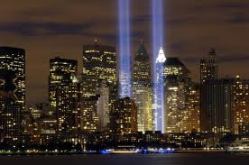
Most of us recession-battered, politically splintered, increasingly angry Americans took at least a few moments today to remember the terrors of a bright September morning exactly ten years ago. The stirring commemoration ceremony at Ground Zero may have soothed our savage partisan breasts for a few moments. Or maybe not. I couldn’t think of anything suitable to add to the occasion here at The New Moderate, and I had my seven-year-old son to entertain.
Then I remembered that I had written a piece about the Twin Towers shortly after 9/11, during my previous incarnation as webmaster and resident essayist at The Cynic’s Sanctuary. I was curious to see how my younger self interpreted the events of that surreal day. So I looked it up, and I have to tell you I was stunned.
As a relative innocent back in 2001 (in a way, all of us were relative innocents back in 2001), I had no inkling of the wars, domestic discord and other disasters that lay ahead. Granted, there were no deadly follow-up terrorist attacks, as so many of us had feared, but my predictions about America’s resilience, character and ultimate triumph proved to be almost fatuously optimistic (especially for a professional cynic).
But I’ll let you draw your own conclusions. I’ve unearthed the ten-year-old time capsule for you, complete with the inaccurate death toll and the sunny prophecies, which I hope won’t prove to be entirely delusional.
Notes on the Fallen Towers
I used to commute into New York every weekday when the World Trade Center was new. Those upstart twin towers dominated the skyline like a double exclamation point in boldface type, and I resented them for surpassing the legendary Empire State Building as the world’s tallest. They didn’t strike me as worthy successors to the Babe Ruth of the skyline: two long boxes, massive and featureless, planted side by side. No personality, no wit, no soul, no crowning spire to lure the next incarnation of King Kong. I hated the way they dwarfed the classic Jazz Age skyscrapers of lower Manhattan. Those vintage towers had grace and finesse, with their artful setbacks, slender soaring shafts and jubilant crowns. They were Fred Astaire and Ginger Rogers and George Gershwin transformed into masonry, perfectly clustered with careless panache. Now they had been shoved off center stage, made to look skimpy and irrelevant by a pair of hulking automatons. Imagine the architectural equivalent of twin Arnold Schwarzeneggers, and you’ve imagined the impact of the World Trade Center on the New York skyline of the early seventies.
We gradually accept what won’t go away. I came to appreciate the twin towers as I passed them every day on the bus into Manhattan. I’d spy them from across the Hudson, glimmering silver-blue in the morning light, casting angled shadows on each other’s facades, the two profiles merging neatly into a single silhouette as we approached the Lincoln Tunnel. I began to notice a few touches of refinement: the beveled corners, the subtle horizontal bands, the delicate vertical tracery of the windows that became visible at close range. On a sparkling day, viewed from the promenade in Brooklyn Heights, they added something to the skyline approaching dignity and even beauty. You could see the twin towers looming above the tricky streets of Greenwich Village or SoHo, and you immediately knew which way was south. And so the hulking towers became trusted sentinels, solid and reassuring. When we saw the World Trade Center in the distance, we knew where we were.
Now we can’t be so sure. Who would have believed that these twin pillars of American capitalism could crumble in the manner of an imploded housing project? To watch them burn like a pair of colossal torches, then to watch them fall with such sad dignity — slowly and somberly, with the weighty vertical descent of a man executed by firing squad — filled me with wonder and sympathy and mad rush of adrenaline. We were witnessing one of the most horrific catastrophes in American history, with a human toll comparable to at least three Titanics. Who would have dreamed that the monumentally bland World Trade Center would become a haunted place, comparable to the fields of Antietam or Shiloh?
I remember my first visit to the site of the infamous Triangle Shirtwaist Factory fire of 1911, where 146 workers died in a conflagration not far from New York’s Washington Square. I went in the evening and stood there alone, wondering at the huge loss of life, imagining the screams and the flames and the plummeting bodies seventy years before. That was the kind of disaster an American could grasp: the loss of 146 souls seemed more than catastrophic enough to our sheltered minds. The place was amply haunted.
Now and in the future, any one of us who visits the deserted streets of lower Manhattan in the evening, over on the West side where the World Trade Center used to stand, will be communing with the ghosts of five thousand, our own contemporaries — people who watched “Friends” and drank Diet Pepsi and logged onto America Online for a lighthearted chat. We don’t associate modern buildings with ghosts, and we don’t associate people who watched “Friends” with death. People like that — people like us — shouldn’t be dead yet, and it infuriates us that they should have been ejected from our midst at the whims of a few sullen fanatics engaged in a chronic vendetta against America. We’ve had no experience with holocausts on the order of Dresden or Hiroshima, or the Nazi death camps, or the lesser-known Soviet and Communist Chinese horrors, or the near-annihilation of the Armenians during World War I. We hope we never come to know death as a fact of everyday life.
The pundits are proclaiming September 11, 2001, as the day that changed America forever. “Forever” is a pretty powerful word, and I’m sure its widespread use is premature. But I’d guess that the recent Age of Irony has been dealt a shock from which it will be difficult to recover. It was a merry time to be alive if you were a bourgeois Baby Boomer at large in our republic. It was an age marked by a kind of boutique sophistication that really didn’t spring from authentic American roots. We fussed over restaurant meals that featured balsamic vinegar and capers and all manner of herbed meats. (We called it “New American Cuisine” but it really seemed more like a variant of Northern Italian.) We adopted drop-dead postmodern attitudes that trickled down to us from the French. We practiced detachment and moral relativism. We began to drink espresso and latte; we were distancing ourselves from the bowling alleys and split levels of postwar American culture, the way newly minted sophisticates distance themselves from their hopelessly square parents with the Buick in the driveway. We’d make an occasional allowance for a great “retro” diner or a Rat Pack retrospective, but it was all done with finger-quotes slicing the air — a sense of irony that marked us as superior to our surroundings, at least in the presence of kindred spirits. We Boomers had abandoned the America of Lincoln and Will Rogers and World War II for a pseudo-European ambience that attracted us but never really suited us.
Recently, just before the attack on America, it seemed we were starting to respond to the old verities again. The flourishing “Greatest Generation” industry pandered to our nostalgia for a time when you always knew who the good guys and bad guys were. Articulate traditionalists like Jedediah Purdy were gaining an audience. Now, in the wake of the attack, you can expect the movement to grow wings and soar proudly.
Ever since the disaster of September 11, we’ve been reading and hearing hand-wringing reports on “America’s loss of innocence.” Nonsense. We had lost our innocence way back in the sixties, when the sun-dappled serenity of Beaver Cleaver’s world suddenly gave way to the unholy squawks of rock stars and radicals, assassins and Antichrists. Anyone remember Charles Manson? Anyone care to review the vocabulary used in American films of the past thirty-odd years?
No, the terrorist attack hasn’t put an end to American innocence; I submit that it has actually shocked us back to innocence. We’ve suddenly awakened out of our Seinfeldian detachment and ennui (so hip, so smirky, so fin-de-siecle); in its place, we’ve unleashed a revival of red-white-and-blue fervor unseen in this country since General Eisenhower returned triumphant from his crusade in Europe. Flags wave proudly from our front porches; we talk about justice, evil, self-sacrifice and other archaic concepts that would have seemed alien to most of us just a week before the disaster. And it’s high time. I’d hate to see the proverbial pendulum swing toward cheap jingoism, but we were a society in need of awakening, and the terrorist attack seems to have galvanized our collective energies. I wouldn’t mind seeing a return to the fundamental selflessness, courage, simplicity and neighborliness that characterized the old America at its best. It will be a hard time for cynics, but then such a society would probably give us less to be cynical about. I know I wouldn’t mind sacrificing some of my cynical edge to live in a society that truly earned our respect and affection.
A final word about the fear that seems to have entered our minds like a burglar sneaking into our house by night. To see the twin towers of the World Trade Center collapse before our eyes was fearsome enough. And no doubt most of us feel apprehensive about the attacks that are almost certain to come. Will the terrorists strike the U.S. Capitol next, or Independence Hall, or the Statue of Liberty? Will they target the Empire State Building, once again the monarch of the New York skyline? Will they take aim at Old Ironsides or Mt. Rushmore or even Disney World? Will they try to spread plagues more virulent than their own fanaticism?
Let them try to destroy this country. Tragedy has firmed our resolve and helped us recapture some of the essential qualities that made us Americans in the first place. Fast-track pre-schools and fruited meat entrees seem strangely irrelevant now. More than ever, our minds and souls are safe from attack. Terrorists can tumble the buildings around us, but they’re powerless to destroy what’s inside us. Our souls are stronger than steel and concrete. As long as we’ve built them on solid foundations, they’ll survive any assault the terrorists can devise.
* * * * * * *
I wonder today about the strength of our souls and their foundations. And I wonder, too, whether our own home-grown political extremists are continuing the terrorists’ work for them. We’re still in the midst of a long and dispiriting 9/11 hangover. Is it the beginning of the end for the United States as we knew it, or will our national pride and resourcefulness prevail as it had in the past?
Come back in ten years and see what you think.
Three Keys to a Peaceful Revolution

What's that vast cloud centered over the nation's capital? Don't worry, it's only Hurricane Irene.
The gods must be seriously peeved. This past week alone, they unleashed an unnatural wave of natural disasters up and down the East Coast: a rare earthquake, a hurricane that pummeled its way to Vermont and beyond, lethal floods, falling trees and even a flurry of mini-tornadoes. The underground tremors cracked the tip of the Washington Monument and toppled stone pinnacles from the central tower of the National Cathedral.
If you happen to be a professional soothsayer, you’ve probably concluded by now that we’re as doomed as Julius Caesar: ill omens like these can only portend our imminent destruction. In fact, a lot of us have been thinking about destruction lately: the destruction of our economy, our retirement portfolios and the prosperous middle-class way of life we had grown accustomed to.
We’ve also been lamenting the deterioration of American politics into an ongoing shouting match between terminally irreconcilable extremists on the right and left. The majority of Americans believe their government is broken — not a good thing in a democracy — and the approval ratings for Congress have threatened to dip into the single digits.
In my darker moments I’ve flirted with the desperate remedy of revolution — preferably a peaceful moderate revolution — as the only way to drive the crooks, loonies, big-money interests and hard-shelled partisans out of Congress, K Street and the Supreme Court. We need to send a batallion of fresh-faced Mr. and Ms. Smiths to Washington, pronto, so they can snatch power away from the old guard and return it to electorate. But of course that won’t happen as long as the old guard has anything to say about it, and of course they always do.
The upside of this mess is that honest liberals and conservatives can finally agree on something: our government IS a mess, and it needs to be radically renovated. But how? By tossing brickbats and grenades at the lobbyists who have bought our elected representatives? By marching right up the steps of the Capitol, breaking down the door and occupying the House of Representatives?
If it’s high drama (and a prison sentence) you want, feel free to take me up on my proposals. But I know somebody with an even better idea.
He’s Stephen Erickson, founder and leader of Americans United to Rebuild Democracy. A lanky Yankee from Portsmouth, New Hampshire, Erickson is a centrist who’s unafraid to propose radical reforms. (He was also the guiding spirit behind CenterMovement.org, a moderate group that had the good judgment to appoint me as a board member.)
Stephen Erickson is a pragmatic idealist. No brickbats, barricades and rabble-rousing demonstrations for this cool-headed revolutionary; instead, he outlines a three-point plan that would peacefully and legally shift power away from deeply entrenched partisan politicians and their big-money sugar-daddies. On his organization’s newly launched website, RebuildDemocracy.org, Erickson persuasively describes the problem:
We believe there are several root causes of our political system’s dysfunction.
First, Members of Congress are more concerned with their next re-election rather than the next generation. They are too focused on themselves and their political careers rather than the good of the country.
Second, Members of Congress take campaign donations from the same interests they regulate, in a corrupt system closely resembling bribery and extortion. Practically every piece of legislation passed – and not passed – in the US Congress is hopelessly tainted by special interests.
Third, the political establishment has created a an election system that overwhelmingly favors incumbents. Congressional elections are fundamentally unfair. Democrats and Republicans in Washington protect their own interests at the expense of our democracy.
It’s not always Right v. Left. Not on every issue.
Sometimes its Insiders v. Outsiders. Sometimes it’s simply right versus wrong.
There’s no need to kid ourselves. Grassroots activists on the Right and Left will always disagree intensely on most things. But that disagreement should not keep us from acting in our common interests or upon our common beliefs.
Those of us on the outside must work together to fix our broken democracy because Republican and Democrat establishment insiders stand together to protect their own privileges at the expense of the public good.
After his rousing call for a long-overdue housecleaning, Erickson reveals his three-point plan for rebuilding American democracy: 1) Term Limits for Members of the House and Senate, 2) a Clean Elections System, and 3) a Ban on Gerrymandering.
I have to confess that when I first saw the three-point plan, I shrugged and wondered “Is that all there is?” I expected more of a righteous, confrontational cleansing of the temple of government. I wanted to overturn the tables of the corporate money-changers and send them whimpering back to their offices on K Street. I wanted to ship the corrupt representatives back to their home states and let them gnash their teeth in exile from Washington, preferably on the unemployment line.
Instead, we seemed to be looking at solutions that only a dedicated policy wonk could love. Who cares about gerrymandering, right? The convoluted remapping of Congressional districts has been a fact of life since Davy Crockett’s day.
Then I delved into each issue, looked at Erickson’s reasoning and began to see the wisdom. Here, in three clear-cut, eminently reasonable, perfectly legal steps, was a plan for the quiet revolution that I (and plenty of other concerned Americans) had been dreaming about. It was pure genius.
According to Erickson, political careerism is the root of all evil in government. Eliminate the ignoble, self-serving preoccupations and rewards that go hand in hand with endless incumbency, and you’ve effectively cleaned up our democracy.
 Let’s start with step one: term limits. Serving in Congress is addictive. Sure, most members could earn more as high-profile lawyers or corporate honchos, but the lifetime fame, power, perks and generous pensions are hard for any ego-driven individual to resist. Most of our elected representatives would take dictation from the devil to keep their comfy perches for life. And many of them end up doing just that.
What would term limits accomplish? Aside from banning the option of lifelong incumbency and the wheeler-dealership that accompanies it, this reform would force some much-needed fresh air into our government. Here’s how Erickson explains it:
Knowing that they won’t have a long careers in Congress, no matter what they do, our elected representatives will focus less on re-election and more on the needs of the nation. They will be less inclined to mortgage our tomorrows for political gain today. Term limits will circulate new and public-spirited citizens from a wide range of backgrounds through Congress. By constantly drawing new members from the public, Congress will more accurately represent the views and interests of the American people as a whole.
Imagine it, if you can: public servants who actually serve the public. That’s what the Founding Fathers had in mind when they created the first modern representative republic on these shores. They hadn’t planned on those representatives catering to special-interest lobbies in exchange for generous campaign contributions.
 The unsavory influence of lobbyists leads us to the second of the three steps: clean elections. What makes an election “dirty” in the first place? As Erickson puts it:
Lawmakers should not be allowed to directly and knowingly take campaign donations from the same interests they regulate.
At worst, campaign donations from special interests are legal bribes in which members of Congress create legislation to benefit their contributors. And it’s a two-way street. Members of Congress can apply pressure – subtle or otherwise – to a given business for protection money against unfriendly legislation. In other words, those elected representatives are essentially practicing legalized extortion.
Erickson’s proposed clean election system would finally break the link between lawmaking and campaign funding. Lobbyists with deep pockets would no longer enjoy the kinds of borderline-illicit rewards they now take for granted. Neither would the politicians. One hand would no longer be washing the other, yet everyone involved would be cleaner than ever. I like it.
What would a clean elections system look like? Erickson mentions two possible approaches: the Fair Elections Now Act, already proposed by the last Democrat-controlled Congress, would limit private campaign contributions to $100, then multiply each contribution fourfold with public money. (My own opinion: probably not the smartest solution during a federal debt crisis.)
The second approach, known as the Patriot System, would establish a blind trust for all campaign contributions. In other words, candidates would have absolutely no idea who’s funding their campaigns. They’d have no incentive for rewarding (or punishing) any group based on its generosity (or lack thereof). In return, no group would expect special favors from a candidate.
I think the Patriot System is brilliantly simple — and simply brilliant. (It was the brainchild of two Yale professors, Bruce Ackerman and Ian Ayres.) No veiled bribes, no extortion, no sweetheart deals. Just pure representative government. I feel cleaner already, don’t you?
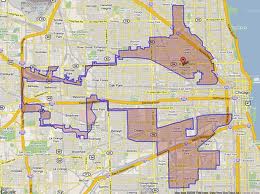
Gerrymandering at work: believe it or not, this is a single Congressional district in the Chicago area.
All right, let’s move on to step three: an end to gerrymandering. I know, I know… it’s probably not the most exciting way to spark a quiet revolution. But think about it: we’d be eliminating one of America’s oldest and most deeply rooted forms of political corruption. You can trace its pedigree all the way back to 1812, when Massachusetts governor Elbridge Gerry redrew the boundaries of legislative districts in his state to create safe havens for members of his party. (The convoluted shapes of the redrawn districts reminded people of salamanders — Gerry’s salamanders… gerrymandering, get it?) Party operatives have been following Gerry’s lead ever since.
Today the problem is even more pervasive, aided by modern advances in mapping political demographics. Erickson writes:
With the coming of information technology, gerrymandering has moved from art to science. Today neighborhoods are cut into intricate puzzle pieces to effect maximum political advantage for the politically privileged. In gerrymandered districts, voters with minority viewpoints are practically disenfranchised and incumbent legislators are entrenched in office for life.
How do you redraw Congressional districts without re-gerrymandering them? The key, according to Erickson, is to move the process as far away from politicians and political partisans as we possibly can. We could even use (are you ready for this?) the historic boundaries of cities, townships and/or counties to define the districts. But that’s too simple, isn’t it? I’d say it’s admirably simple: instead of jiggling the map to manufacture one-party districts that automatically favor incumbents, we’d be creating districts of citizens who simply live near each other. What a concept!
The three proposed election reforms are great ideas, I can hear you say… but how do we turn them into law? Good question. We’d need a Constitutional amendment. But what if our representatives refuse to pass an amendment that would effectively curtail their longevity and power? Then we blaze a second path, one that has never been tried throughout the two-plus centuries of our republic. But it’s perfectly legal. In fact, it’s spelled out in the Constitution.
Article Five tells us that Congress must call a new Constitutional Convention when two-thirds of the state legislatures request it. If the proposed amendments are then approved by three-fourths of the state legislatures, they become law. So the power to change our nation’s political system for the better actually resides at the state level. The states could effectively tell Congress that the people demand term limits, clean elections and an end to gerrymandering. And Congress would have to listen.
To make these reforms happen, of course, we have to push for them. I think Americans United to Rebuild Democracy is the ideal place to start pushing. You have to agree that it’s a smarter solution to our political woes than tossing brickbats and grenades at scurrying lobbyists and Congressmen. Not as much fun, maybe, but a whole lot more practical and productive in the long run.
Even better, it could help put an end to the ongoing war between the left and right. We might still bicker about taxes and entitlements, but we can all agree that our broken political system needs fixing. And when we fix it together, we’re bound to find some common ground to unite us. I hope you’ll join us and help with the repair work.


 THE NEW MODERATE