Summer Rerun #2: Where the Left and Right Join Hands
While I’m busy vegetating in the wilds of upstate New York, you can enjoy another entry from the first year of The New Moderate. I used to write them shorter in those days, a habit I should probably learn to embrace once again. This column sounded a mildly hopeful note about the future of American politics, and I still hope I wasn’t being delusional.
It would be pleasant, and a bit of a hoot, to imagine our hardened lefties and right-wingers holding hands, swaying in unison and singing Kumbaya. Impossible, you say? Downright silly? Well, yes and no. In the unexpectedly polarized Age of Obama — with its noisy town-hall rants, radio demagogues and fiery online diatribes — such an overripe expression of sociopolitical harmony seems to be out of the question. And yet…
I’ve noticed some striking similarities between certain sectors of the left and right. Of course, you won’t see a HuffPost blogger from San Francisco cozying up to the nearest Wall Street Journal columnist anytime soon. But down in the less exalted regions of our populace, where the money flows less freely and virtuous Americans fret about their futures, a strange and forbidden sort of union seems to be taking shape. It hasn’t happened yet, and it might scare the pants off our more elite commentators if it does. But the vibrations are starting to resound across our suffering republic, and some of us are picking them up on our internal radio receivers.
I’m talking about grassroots populism, a movement that has bubbled up to the surface from the masses of downcast, angry, alienated citizens across the political spectrum — ordinary Americans who want their country (and money) back. This movement is revolutionary, it’s unprecedented in my lifetime, and the elites can no longer ignore it.
Right-wing populists and left-wing populists don’t agree on everything, naturally. You can still find them raging against their own separate and irreconcilable hobgoblins (right-wing populists hate illegal immigrants, left-wing populists hate racism). But their anger merges and swirls like a newly spawned tornado around some important common issues.
The populists from both camps agree that the federal government is spending us into oblivion, racking up debts that even our most brilliant yuppie grandchildren won’t be able to repay. They agree that our elected representatives are essentially puppets operated by the lobbyists who fund their campaigns. And they’ve concluded that our economic system has been rigged, like some great sinister casino, so that the house wins every time. Countless billions of our money to bail out the very banks that decimated our life savings! Eight-figure bonuses for evil investment bankers who masterminded the crapshoot!
Frank Rich, the generally doctrinaire liberal columnist for The New York Times, recently observed that American politics is no longer about the struggle of right versus left, but of ordinary Americans against the elite. Right-wing preachers like Sean Hannity can no longer convince their congregation to support Wall Street, while President Obama can’t seem to persuade his base that his colossal expenditures will halt the Great Recession.
The sages of our public commentariat still prefer to organize our body politic as if they were setting up an orchestra: liberals and socialists over on the left, conservatives on the right, and moderates like us in (where else?) the middle. I confess to the same habit, and I also confess that I’m finding it less and less applicable to our peculiar time and place.
I never thought I’d catch myself agreeing with Frank Rich about anything, but maybe a Great Recession makes for strange political bedfellows. Very strange. (Good night, Frank. Turn out the light, will you?)
Summer Rerun #1: Advice for the Thinking Moderate
Since I’m on vacation and trying not to think too hard, I thought this would be the ideal time for summer reruns of New Moderate columns from 2009 — our first year as a full-fledged blog. Daily readership in those days numbered in the low-to-mid double digits, so these columns will be new to most of you. I’ve picked out a few that are still relevant in 2012… and I’ll run them every couple of days until we return to live action.
Do moderates really need to think? Can’t we just examine the opinions of the extremists and take the average?
Afraid not. There’s more to being a moderate than dwelling in the middle. The midpoint has its charms, but we moderates could use a little more imagination, fire and gusto if we want to see our ideas prevail. That’s right — we need ideas, too. And the more original, the better.
Example: Both right-wing and left-wing groups depend heavily on lobbying, the unsavory practice of allowing special interests to fund the campaigns and pet projects of senators and congressmen in exchange for “favors.” The lobbyists fill a politician’s pockets, and they expect said politician to push their agendas in return. In other words, our elected representatives can be bought — and believe it or not, it’s all perfectly legal.
Where does a conscientious thinking moderate stand on lobbying? There’s no middle ground here, because the left and right seem to be in perfect agreement that lobbying is a politically (and financially) useful practice. We moderates can’t simply “take the average” on this issue and walk away. We need to stand up, stick our heads out of our cozy foxholes and denounce the practice of paid lobbying until somebody listens… until it becomes unacceptable and eventually illegal for private interests to play puppeteer with the representatives of the people.
What will it take for American moderates to grow into their destined role as outspoken champions of impartiality and fair play? Our republic and its ideals are being frittered away by a combination of partisanship, corruption and inertia. Thinking moderates everywhere need to renounce their traditional role as quiet and dispassionate onlookers. We’ve been too polite. We need to let ourselves get angry now and then, to awaken our inner Patrick Henrys (are you down there, Patrick?) and let fly a good resounding salvo in defense of our beliefs.
Come on, moderates, let’s find our voice!
A Colorado Massacre Postscript: Why Does It Happen Here?

Of course it had to happen on July 20, the anniversary of the single most stupendous achievement in the history of our species. And in a way, it paints a sorry symbolic portrait of a great nation in decline. From 1969 to 2012 — a mere 43 years — we’ve gone from walking on the moon to witnessing a massacre of innocents by a lone gunman at a Batman movie in a suburban multiplex.
I probably shouldn’t read too much significance into the date the killer chose to carry out his deadly deed. It’s obvious that he picked July 20 because that’s when “The Dark Knight Rises” premiered at a midnight show in Aurora, Colorado. But, given my general pessimism about the state of this Union, I couldn’t help noting the date and thinking back to that other July 20 that so many of us baby boomers remember so vividly.
My brother and I can still recite Neil Armstrong’s final words as the lunar module closed in on its target: “Forward, forward… drifting to the right a little… contact light.” That was the moment: the touchdown, the goal achieved. And good old Walter Cronkite, as boyishly exultant as the rest of us, shouted a simple sentence that drove it all home: “MAN ON THE MOON!” The Eagle had landed.
So why does it happen here, almost routinely, with such sad and predictable results, in the same nation that sent men to the moon? Is it our national gun fetish — or something deeper and even darker?
And why are the perpetrators so eerily indistinguishable from one another? It’s always the same, isn’t it? Young single male. White (usually). Quiet (always). Kept to himself mostly. Unwilling or unable to form intimate relationships. Frustrated. Very frustrated. A bit grandiose. And obsessed with guns.
We don’t really know what kind of devils got into the head of James Holmes. A stellar student until very recently, he fit the classic mass-murderer profile like a size-10 foot sliding into a size-10 shoe. But most lonely young men who fit the same profile don’t launch homicidal attacks on random crowds.
Young Holmes had been an academic superstar… his prowess in school undoubtedly formed the core of his self-esteem. One of his former classmates recalled that the kid never had to take notes; he just sat there in silence, absorbed everything by osmosis and aced his exams. But maybe the doctoral program in neuroscience forced him to bump up against his intellectual limitations for the first time in his life. (I bumped up against mine a little earlier, in high school physics and calculus… and I have to tell you it took years to recover from the shock.)
Holmes’s grades began to crumble; he was about to be put on academic probation when he withdrew from the doctoral program at the University of Colorado. The world suddenly must have seemed sinister and unreal to him… as sinister and unreal as a Batman movie. What a joke… and so the former wonk metamorphosed into The Joker, that malevolent archvillain and Batman nemesis with the grotesque grin etched permanently onto his face.
Did the young man’s first brush with academic failure drive him to bitterness, despair and bloody revenge fantasies? Did it poison his shy, bookish, grade-dependent nature? Was it enough to drive him insane?
We could speculate that America has become a hard-driving culture in which failure is not an option. And yet Japan is, if anything, even more hard-driving and intolerant of failure. But here’s an eye-opening statistic for you: in the U.S., the annual gun-related death rate per 100,000 people (including both homicides and suicides) is 10.27 — among the highest in the world. In Japan, the figure is 0.07 — among the lowest in the world.
Guns simply are not indispensable props in Japanese culture. By contrast, Americans have been romancing them since since the days of the lone frontiersman with his buckskin jacket and trusty Pennsylvania long rifle… a potent symbol of American manhood and independence. The Western gunfighter and Prohibition gangster long ago entered American lore, along with leathery, gunslinging cinematic role models like John Wayne and Clint Eastwood.
An American man’s sense of personal failure — his inability to live up to culturally imposed standards of success and manliness — can turn lethal in the presence of guns. The possession of a long, cold steel weapon bolsters his sense of potency. He begins to imagine himself a stoical hero in the Old West tradition… a hardened maverick half in love with violent death.
Because, you see, in addition to being a success-driven and gun-loving culture, America is also a narcissistic culture. Just as we love to believe that any American can succeed with enough grit and hard work, we love to believe we’re special. (The Japanese don’t.) With a little imagination, we envision ourselves as heroes in the making… even celebrities. Walter Mitty is alive and well, and today he carries a Glock. James Holmes carried two of them, along with an assault rifle and an old-fashioned Remington shotgun.
Right-leaning men (and plenty of women) in America today seem to be wedded to their guns — or at least the concept of guns — as a form of resistance to encroaching government and its entangling tentacles. If the Second Amendment were to be repealed — if it suddenly became illegal for Americans to own guns — why, the feds could confiscate our property without a peep and we’d all become slaves. Or so their nightmare fantasy goes.
But what if we simply outlawed assault rifles and other semi-automatic weapons that spray sudden death toward crowds of hapless victims? I can’t think of a single peacetime use for such weapons — except to make it easy for psychopaths to commit mass murder. And yet the NRA and its amen corner would go all apoplectic if we took their semi-automatics away.
I wonder how many intruders they expect to be breaking down their doors in the near future. I wonder how many shots per minute would satisfy their lust for the heroic superpowers denied to them in life?
So how do we get our gun crisis under control without triggering an armed rebellion from the NRA crowd? In The Cynic’s Dictionary nearly twenty years ago, I proposed (only half-facetiously) that we should allow everyone to own guns but suspend the production of bullets. We probably don’t have to go that far. But it’s definitely time to push for an unconditional domestic ban on assault weapons, which should be strictly limited to use by the military in foreign wars.
And let’s toughen 0ur standards for granting gun permits. We already put prospective drivers through a rigorous battery of written and hands-on tests before they can earn their licenses. Let’s do the same for firearms.
With over 250 million guns already in private hands here in America, it won’t be easy to stuff this unwieldy genie back inside the bottle. But since the worst gun offenders are usually young and inexperienced, we can raise the bar to make sure that prospective gun owners are fit to use firearms. If they fail, or if they violate gun laws, we simply deny them a license the way we would deny a license to a clueless driver. End of story. The Second Amendment doesn’t prevent us from subjecting gun owners to more intensive screening.
Fair enough? I think so. After all, in the wrong hands, both guns and cars are deadly weapons. We need to be at least as vigilant with gun owners as we already are with drivers.
Still not convinced? Just ask the parents of the twelve people whose lives ended prematurely in that Colorado movie theater on the 20th of July.

credit:@ChazFrench
Philadelphia, July 4, 2012. I found a prime parking spot near the National Constitution Center, grabbed a bottle of cold water from a street vendor and hurried toward the meeting place. According to my trusty cell phone, it was exactly 3 p.m. and 97 degrees Fahrenheit.
I arrived at grassy, shade-deprived Independence Mall just in time to watch the 99% Declaration delegation parading toward the designated patch of turf for the reading of the grievances. If their numbers were slim, the audience waiting for them was even slimmer.
Yes, the heat and the July sun were brutal and unrelenting, but you’d have expected a more abundant gathering of Philadelphians to greet the group that promised to reboot American democracy. Instead, we were looking at a dozen or so diehard patriots and roughly the same number of National Park employees clustering in the few shadows produced by the miniature trees and taller shrubs at the edge of the mall. This couldn’t have been an auspicious sign.
The 99 Percenters began to stream onto the mall. Some of them meandered toward Independence Hall while others stood their ground on the official meeting spot at the corner of Fifth and Market Streets — prime Philadelphia real estate for a revolutionary gathering. One of the leaders urged a few colleagues to round up the meanderers and herd them back to the fold. This operation took several minutes while the organizers organized themselves and set up a podium.
I scanned the gathering and made a few rough estimates. The delegates appeared to number about forty. (There had been approximately forty more at Continental Congress 2.0, but some had walked out over ideological differences and others simply skipped the festivities.) About two-thirds were men. The group spanned the age spectrum from about 20 to 70-plus, visibly weighted at both ends… lots of grad students and retirees, I presumed. Predominantly but not entirely white. Informal and a little shaggy but also alert and well-behaved.
Some of the 99 Percenters carried anti-corporate placards, chanted about the “banksters” or wore t-shirts with messages like “Practice Truth, Fear Nothing.” I noticed a spirited middle-aged woman with luxuriant hippie hair who had run for Congress… an extraverted young man in a wheelchair… a charismatic African American student with waist-long dreadlocks. And apparently a few representatives of the rival Occupy Wall Street crowd had tagged along to hear the message. (One of them insisted that 9/11 was an inside job and that the FBI had declared war on all of us.)
A young reporter from the Philadelphia Daily News (Philly’s tabloid equivalent of the more famous New York Daily News) interviewed one of the delegates. She appeared to be the only member of the press in attendance, unless you count The New Moderate… no TV cameras, no sense that the whole world was watching.
It was time for the reading of the Grievances. Bullhorn in hand, the first speaker conducted a “mic check” that sounded like a church responsorial. The delegates repeated each phrase verbatim, in eerie unison, sounding more like programmed androids than free-thinking radical patriots. I grew a little uneasy. But it was only a mic check, after all — to ensure that the speaker could be heard over the bustle of Market Street.
Now the assembled delegates took turns reading the final draft of their Petition for a Redress of Grievances. Brimming with righteous enthusiasm, they managed to rouse the overheated listeners (including this one) with their soaring, patriotic and appropriately accusatory message. In fact, the petition struck me as noteworthy enough to reproduce here in its entirety, and I urge you to read it from start to finish:
Continental Congress 2.0
Petition for a Redress of GrievancesA New Declaration
WHEREAS THE FIRST AMENDMENT TO THE UNITED STATES CONSTITUTION PROVIDES THAT:
The people have the right to petition the government for a redress of grievances.
BE IT RESOLVED THAT WE, THE PEOPLE of the UNITED STATES OF AMERICA, in order to form a more perfect Union, by, for and of the People, have convened a NEW CONTINENTAL CONGRESS this week of July 4, 2012 in the City of Philadelphia. We, the people, have deliberated, drafted and ratified a PETITION FOR A REDRESS OF GRIEVANCES to be served upon the United States Congress, Supreme Court, and President, prior to November 6, 2012.
Our country is beset by problems too large to fit comfortably under rubrics like liberal, independent, or conservative.No single label fits, and no single ideology suits, but what we all have in common is that we are all (left, right, and center) being marginalized and defeated by the moneyed interests of the 1% as we struggle for life, liberty, happiness, comfort, and health. The 1% have enjoyed inordinate power and influence over our lives as they spread propaganda through the corporate media, and extract our nation’s wealth, only to deposit it out of the country. All the while, the 1% are delighted by our inability to recognize and address our common plight in any meaningful way.
NO MORE!!
We are the truckers, the teachers, the first-responders, the engineers, the self-employed and unemployed, the off-grid and organic farmers as well as the cutting-edge, fully-wired, 4G digital entrepreneurs. We are the butchers, the bakers, the builders and the makers. We are the foundation of our country!
We gather in Philadelphia for a cause larger than ourselves. If we are to succeed in taking back our country we must put aside the petty partisan differences that might divide us. We must recognize that many of those differences have been created and demonstrated by the 1% in their efforts to maintain control and profits at our expense.
We will not agree on everything and that is to be expected. We only need to agree on ONE THING:
American Government cannot continue to be sold to the highest bidder.
Another group of Americans joined together in Philadelphia over the days leading up to what we now proudly call Independence Day. Those Georgia planters, New York bankers, Massachusetts lawyers and Virginia scholars had radical differences and little in common when they began, but they finished by signing a Declaration that gave birth to our great nation and changed the world. We, too, can change the world by renewing their vision and our democracy.
We petition the government for redress of the following grievances:
Our government has allowed organizations to have undue influence and control over policy decisions affecting the people. The rights of organizations, including corporations, nation states, labor unions, and other collected bodies, are not the same as living human beings. No single organization shall have more influence over our government than that of an individual citizen. Corporations are not people.
Our government has allowed freedom of speech to be corrupted by the influence of money. Money is property, not speech.
Our electoral system has been unjustly weighted in favor of two major political parties. This, in combination with enormous campaign expenditures has subverted our democracy and discouraged citizens from participating in the electoral process.
Our current political system allows for the legal bribery of our government officials. They have been part of a “revolving door” with the private lobbying sector and have engaged in insider trading with the very companies they are charged with regulating.
Mainstream media, with no regard for the public they are meant to serve, have misled and misinformed the people, suppressing informed debate and crippling democracy in their single-minded pursuit of profit.
Our privately-controlled and exploitative monetary system, unjust trade policies, and regressive tax system, which greatly favor the 1%, are increasing inequality and eroding the American dream.
Our Congress has aided and abetted a massive fraud by predatory lenders, bankers, speculators, and financiers which has deprived millions of Americans of their homes, property, and livelihoods.
Our government has not recognized our right to clean air, clean water, untainted soil, and safe food. It has failed or refused to enact and enforce laws preventing the destruction of our natural ecosystem, willfully ignoring empirical evidence of significant harm caused by human interaction with the environment.
Our government has failed to protect essential civil liberties guaranteed in the Bill of Rights. American citizens should not be indefinitely detained without due process of law. Their rights to privacy and freedom of speech on the internet should be ensured, and the choices of romantic partners must not be restricted by the government.
Our country imprisons more people per capita than any other country in the world to feed the profits of the growing private prison-industrial complex. Many people are imprisoned for non-violent drug crimes causing harm only to themselves while white collar criminals, who have defrauded the American people, walk free.
Our Congress has abdicated its responsibility for the declaration of war, allowing the United States military to engage in unconstitutional military actions and occupations abroad. There is an unacceptable lack of transparency in negotiations between the military and multi-national industrial contractors who profit from perpetual war.
After Congress has allowed or required our men and women to be sent into military action, it is has failed to uphold its promises of benefits and medical care to those who have served unless they have been physically injured. This is not right.
Our government has failed to prevent healthcare, insurance, and pharmaceutical companies from profiteering off of the illnesses and injuries of the American people. The for-profit healthcare system is immoral and economically unsustainable.
The current state of our education system is abysmal and under-funded. Without a well-educated populace, a democracy cannot adequately provide for its own common defense or promote the general welfare.
Our government has been derelict in its duty to substantially and equitably invest in the productivity of its people by supporting job training initiatives that will create more domestic employment opportunities and enable our workforce to transition to an independent renewable energy economy.
Our fellow citizens in Puerto Rico and the United States territories’ have been disenfranchised as voters. This is incompatible with American representative democracy. We recognize the right of Puerto Rico to become a state of the Union.
Citizens of the District of Columbia have been unjustly deprived of their right to determine their own governance. They have been denied congressional voting rights and control over their own local affairs. We recognize the right of the District of Columbia to self-determinative government.
We will be delivering the forgoing (sic) list of grievances, along with suggestions for their redress, to all branches of the federal government in the coming weeks. The American people expect a timely response. If our grievances are insufficiently addressed, we will take legal action in federal court seeking injunctive relief.
The sovereignty of the United States derives from WE, THE PEOPLE.
We will be heard.
And…in time — pushing through obstacles, overcoming set-backs, and basking in hard-won victories — we WILL restore our democracy.
There you have it: the first focused, trans-partisan attempt by the people of the United States to combat the spreading tentacles of the established interests and restore something like genuine representative democracy to our shores. Angry, yes… but admirably rational as well as impassioned. No camping in the plazas or blocking traffic for these 99 Percenters. They meant business, and they delivered.
These were no raving collegiate Marxists or ill-tempered Tea Partiers — just a small but valiant group of concerned Americans who span the political spectrum from left to right… who challenge the unsavory power of unions and corporations alike… who demand genuine representative government… who articulated their grievances in fiery prose and seek redress as outlined in the First Amendment.
They came to Philadelphia with a purpose: to sound a clarion call for justice — for a purified, responsive and ethical system that would honor the founders of our republic and those of us who inhabit it today.
And virtually nobody turned out to hear them. Not the corporate media whose motives they question… not the legions of poor and middle-class Americans with their outsourced jobs and dwindling prospects. Blame it on the summer heat… blame it on poor publicity, dismissive media or general apathy. But I have to tell you that this ragtag assembly on Independence Mall, here in Philadelphia on the Fourth of July, was something noble and potentially historic.
I can also tell you that I’ll be awaiting the government’s response to these grievances with immoderate interest. I hope you will, too.
Disclaimer: The New Moderate is not affiliated with this organization.
On the Fourth of July, 2012, Philadelphia felt more like Calcutta. Oppressive humidity. Temperature in the upper 90s at three in the afternoon. Blazing, blistering sunlight that caused pedestrians to compete for the few shady spots on Independence Mall, the long green rectangle that stretches from the ultramodern National Constitution Center toward 260-year-old spire-topped Independence Hall .
We were standing almost (but unfortunately, not quite) in the shadow of that beloved brick pile where a flock of noteworthy Dead White Males adopted an equally noteworthy document exactly 236 years before. Even a shadow cast by the nearby Wells Fargo bank building would have offered some welcome relief. But no… shadows were in short supply this afternoon as we waited to hear the 99% Declaration. Only mad dogs, tourists and crazed American patriots would venture out on a day like this.
If you haven’t heard of the 99% Declaration, you’re not alone. The motley campers of Occupy Wall Street have garnered far more publicity, though their goals are nebulous, their leadership questionable and their methods more annoying than effective. The 99% Declaration, on the other hand, had set its sights on drawing up a legitimate, finely-tuned Petition for the Redress of Grievances, in keeping with a little-known clause in the First Amendment:
Congress shall make no law respecting an establishment of religion, or prohibiting the free exercise thereof; or abridging the freedom of speech, or of the press; or the right of the people peaceably to assemble, and to petition the Government for a redress of grievances.
I had no idea we could air our grievances directly to the government with the purpose of obtaining redress. Maybe you didn’t, either. Never in our lifetimes has there been a more urgent need to make our grievances known. As the big banks and corporations gain a stranglehold on American life and politics, a petition legally submitted to the three branches of government could prove to be our most vital bulwark against a sweeping plutocratic takeover.
Such a petition could represent American democracy’s last stand against the pervasive power of big money. It’s an issue that should engage concerned citizens from the left, right and center, because it transcends the natural biases of partisan politics. It’s about honesty, transparency, clean government. It’s about restoring a system that represents all the people, not simply those with the deepest pockets.
The 99% Declaration leaders decided to draw up their list of grievances at an assembly of elected delegates (two from each Congressional district plus the U.S. territories and other possessions, for a total of 878). As a bold and fitting gesture that all American history buffs could love, they christened their assembly Continental Congress 2.0. Their goal: to “reboot” American democracy. In Philadelphia, of course. Culminating with a public reading of the grievances on July 4 within sight of Independence Hall. How could anyone with a stake in the American Experiment resist?
In stirring language reminiscent of Jefferson’s indictment of King George III in the Declaration of Independence, the 99% Declaration made its purpose clear:
THE PEOPLE through these non-partisan locally elected Delegates shall gather to condemn and demand redress from the individuals currently in control of the United States government. We denounce the entrenched politicians and lobbyists:
-for engaging in all manner of corrupt practices to remain in office at any cost, attain money and accrue personal power;
-for continuously violating the public’s trust and general welfare of the People of the United States of America by auctioning public policy to the highest bidder;
-for abandoning the precious covenant between those who govern and the People based upon an oath to protect and defend our Constitution;
-for placing petty partisan political interests above all other concerns including the short and long term interests of the People of the United States of America and the very continuation of this planet as a viable ecosystem for our children; and
-for failing to govern with integrity, equity and ethics absent all self-serving conflicts of interest.
This was heady stuff, resoundingly righteous and full of portent. The 99% Declaration website went on to enumerate the proposed grievances that Continental Congress 2.0 would consider, debate and refine — from “Corporations are not people” and “Money is property not speech” to “Protecting consumers from predatory practices on Wall Street and Main Street,” “Ending perpetual war for profit” and the more mundane but ever-relevant “Term limits.”
Campaign finance reform, tax reform, protection of the environment, fiscal responsibility, immigration reform, veterans’ benefits and student loan relief all loomed large on the list. This was responsible radicalism, grounded in respect for traditional American values but concerned, as so many of us are, that something has gone seriously awry in the republic.
So why the scanty press coverage for Continental Congress 2.0? Even the Philadelphia Inquirer didn’t bother to send a reporter to the public reading of grievances on the Fourth of July.
Chalk it up to inadequate publicity, poor funding, an unfortunate falling-out with the Occupy Wall Street crowd or perhaps the group’s odd penchant for privacy. Their sessions excluded the public, and even independent bloggers (like me, for instance) were turned away at the door.
I found it ironic that a populist group would limit press attendance to credentialed members of the elite corporate media. But I did manage to grab the attention of Robert Manning, head of the group’s steering committee. A soft-spoken but persuasive gray-haired gentleman in shorts, he apologized for the restrictive admission policy and filled me in on the proceedings.
Manning lamented that a rift that had grown between his group and Occupy Wall Street. It’s a long story: the 99% Declaration was the brainchild of a lawyer named Michael Pollok who worked with a small group of OWS protesters in New York. The Huffington Post promptly published the Declaration, citing it as an official OWS document. The OWS leadership took umbrage, blamed the 99% Declaration people and effectively banished them from the “Occupy” movement. Since then, the two groups have made overtures toward repairing the rift.
But Manning told me about a recent radio interview in which he and an OWS representative were made to sound like carping adversaries, egged on by a sly interviewer who wanted to spark an on-air feud (presumably for the sensationalism and the ratings). Manning admitted that his group was struggling for funding, and that he had contributed a few thousand dollars of his own money to rent the hall at the Convention Center. Contributions to the group aren’t considered tax-deductible because of its classification as a 501(c)(4) — a special nonprofit status reserved for political activist organizations.
Worst of all, the public call for delegates met with a muted response: instead of the maximum head count of 878, less than a tenth of that number actually showed up in Philadelphia for Continental Congress 2.0. Cold reality, as it too often does, had bumped up against the impossible dream.
(In Part 2: The New Moderate attends the rally at Independence Mall on the Fourth of July and witnesses the public reading of the Grievances.)
Chief Justice John Roberts, the genial archconservative who flubbed President Obama’s Oath of Office and declared that corporations are “people,” surprised nearly everyone yesterday by tipping the scales in favor of Obamacare. His deciding vote saved the Affordable Care Act from a premature burial by the Supreme Court. In the long run, his decision could save millions of Americans from the same fate.
Roberts deserves our respect and sympathy for voting like a human being instead of a partisan. It takes a brave and almost foolhardy conservative to break ranks with the faithful and face the inevitable wrath of the Tea Party. Already the hardcore GOP politicians, pundits and henchpersons have lit their torches and roused the village mob; eminent voices on the right have declared him a traitor and a coward. Some even suggested that his epilepsy medication has impaired his judgment.
At least Roberts can sleep with an undisturbed conscience, even as the bellowing of the mob drifts through his bedroom window. But what kind of creature has he saved from destruction? Does anyone really understand the strange, ungainly beast known as Obamacare?
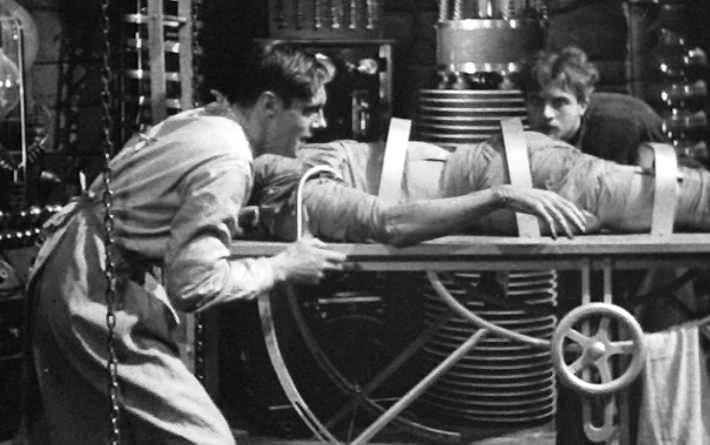
To any objective observer (me included), the Affordable Care Act would appear to be a raging bundle of contradictions, a Frankenstein monster cobbled together from a disjointed assortment of body parts. Let me explain…
Obamacare takes the drastic step of forcing Americans to be insured or pay a penalty. Note that it doesn’t force us to buy insurance; the vast majority of Americans will continue to be insured by their employers. But the act would compel everyone to participate — even Rush Limbaugh, who boasts that he pays his own medical expenses without the aid of insurance (easy enough when your annual income is north of $30 million).
Conservatives regard this individual mandate as a violation of personal freedom. But so is the draft. So, for that matter, is the government ban on the slave trade. Anyone who agrees to participate in a society governed by laws naturally forfeits some degree of liberty.
Obamacare forces us to patronize private insurance companies. Conservatives who defame Obama as a socialist should take a closer look at this provision: the president is mandating that we acquire our insurance from the private sector. No state-run single-payer system… no government boards determining who qualifies for medical treatment and who doesn’t… no death panels telling Grandma she’s lived long enough.
No, the Affordable Care Act steers us directly into the open arms of corporate America, automatically ensuring that insurers do a brisk business collecting premiums from individuals and businesses alike. For a free-market capitalist, what’s not to like? Maybe this…
Obamacare forces insurers to cover everyone. That includes the obese, the drug-addled, the cancer-riddled, the unfit and the atherosclerotic. People with pre-existing conditions can no longer be turned away as bad risks. Obamacare essentially orders the insurance companies to embrace those risks, which strikes even an anti-corporatist curmudgeon like me as a little coercive.
At the same time, it always struck me as a wanton injustice that the people who need health insurance most desperately can’t get it… that they have to live in fear of catastrophic illnesses (and their subsequent treatments) that nobody of ordinary means can afford… that they face financial ruin if their health starts to implode (and, in fact, two-thirds of all personal bankruptcies in the U.S. are currently caused by medical issues).
Should health insurance even be in the hands of the private sector? Should it be controlled by companies that need to make a profit, when the people most inclined to use it would wreck their beautiful bottom line? The current system makes almost no sense, but it’s so deeply entrenched — and the opposition to government-administered healthcare is so obstinate in the U.S. — that any radical realignment would probably spark a Tea Party insurrection or worse.
Obamacare, that much-maligned creature of unappealing and seemingly mismatched parts, somehow manages to tread this landscape with surprising delicacy. It preserves the private-sector control of health insurance while it strings a broad safety net across the chasm to save lives and personal finances. Yes, it’s strange and awkward and will take some getting used to, but this Frankenstein monster clearly has a heart. And for now at least, thanks to the wisdom of Chief Justice Roberts, it’s alive.
The New Moderate’s Annual Vigilance List — 2012 Edition
What do moderates have to worry about? Plenty. If you’re a moderate, trouble comes at you from both directions. I’ve been updating this list each June to reflect our current jitters. It’s my personal list, of course, but I hope it’s an instructive one that reflects your own concerns. The list has grown from its original 15 items to 19 this year. And now, for the first time, I’ve actually suggested remedies for each of the issues. See if you agree or think I’m dreaming.
1. Perpetual recession. (Last year: #1; formerly “The Great Recession”). Our current recession is like nothing else in recent memory: an ongoing economic slump without government or private-sector remedies and, increasingly, without hope of a cure. Private-sector hiring has inched upward this past year, but corporations are still exporting jobs with impunity and Americans are sinking deeper into debt. The stock market is stagnant, real estate is kaput and there’s nowhere else to grow our assets these days. We’ve already endured a Japanese-style “lost decade” (and then some) since the Crash of 2000. At this point we might just be witnessing the American future: prosperity for the few, unending financial woes for everyone else. And let’s not even think about Europe. Trend: In a holding pattern, and all the more alarming the longer it lingers. Remedy: More hiring of Americans by corporations currently sitting on piles of cash… NOW, not later. Barring that… short-term federal work programs à la the New Deal (sorry, libertarians) that would put money in Americans’ pockets and contribute to consumer confidence, which in turn would funnel revenue into American companies and (we hope) inspire them to boost hiring. (Call it the trickle-up effect.)
2. Plutocracy. (Last year: #4) Let’s face it: the United States is a nominally democratic republic currently ruled by a small, self-entitled, self-perpetuating elite based in Wall Street and K Street (home to Washington’s lobbyist community). The Supreme Court’s inexcusable Citizens United decision (sorry, money is NOT a form of speech!) gave powerful corporations and plutocrats carte blanche to elect their favorite politicians, and that influence has revealed itself in spectacular fashion during the 2012 presidential campaign. Super PACs? They have no place in electoral politics. Trend: Approaching a stranglehold. Remedy: Prompt action in the form of a new Constitutional amendment to drive money out of American politics once and for all. If that fails, concerned Americans need to call for a new Constitutional Convention. (Yes, it’s legal). Think of it as Revolution Lite.
3. Conservative obstructionism and refusal to compromise. (New this year.) Last summer’s hair-raising debt crisis persuaded me that America’s conservative Republicans are essentially political sociopaths: they’d rather send the country to perdition than compromise their rigid free-market fundamentalism or (God forbid) raise taxes on the rich. The rise of the unelected Grover Norquist as Republican godfather also gave me the willies: why are so many Republicans terrified of defying this man’s ban on raising taxes? Simple: he has the power to drive them out of office. All Republican candidates must kowtow to the conservative base if they want to win their primaries, and good old Ike wouldn’t recognize today’s GOP. Trend: Increasingly disturbing and sinister; these people are like religious cultists. The possibility of today’s zombie Republicans controlling the House, Senate and presidency should send a chill through all thinking moderates. Remedy: A long shot — marginalize ultraconservative Republicans by forming a moderate third party that would attract both Republicans and Democrats who can no longer identify with the extremists in their respective parties. With broad-based support, it could become the new majority party.
4. Potential class warfare. (Last year: #12) The old American class hierarchy with its nearly invisible boundaries is splitting, like some great ice sheet, into upper and lower castes as mid-status jobs trickle away. Downward mobility is already becoming a way of life for most of us, thanks to corporate non-hiring and the mass destruction of middle-class wealth by reckless Wall Street bankers. Last year’s Occupy Wall Street movement may have been a ragtag affair, but it finally called attention to the sharp resentments bubbling under the facade of our purportedly democratic society. Trend: You ain’t seen nothin’ yet. Remedy: The banishing of big-money interests from government (see #2), along with federally-imposed financial reforms that would restore the more equitable society of the late 20th century: greater regulation of Wall Street and higher (but not punitive) taxes on the rich, plus elimination of most tax shelters and loopholes.
5. The Great Demographic Shift. (Last year: #11.) It’s official: people of color now account for more than 50 percent of American births. This shift is more than cosmetic; while many blacks and Latinos are finding their way into the middle class, many more of them simply aren’t. School dropout rates and community social problems will doom a hefty percentage of these new babies to poverty. At the other end of the age spectrum, Americans are living longer than ever and will require decades of Social Security and subsidized medical care. How will a shrinking middle class support all these needy Americans and still provide enough funds to maintain our infrastructure? Trend: Increasing steadily. Remedy: Anything I suggest would sound like eugenics, so I’d simply encourage middle-class and wealthy Americans to procreate more freely. (Hey, it’s fun!) But I’d also recommend drastic cuts in foreign aid and military spending to open up resources for urgent domestic needs.
6. Polarization. (Last year: #14). The 2012 presidential campaign has exposed the rift in American society as never before: blustering, Bible-believing, gun-loving, government-hating Middle American conservatives pitted against predictably snobbish, well-educated urban progressives who seem to regard their opponents as a lower form of humanity. Trend: Increasing, at least during the presidential election year. Remedy: A vocal (even radical) moderate movement that can make itself heard above the noise and even reconcile the two warring factions. That means outspoken moderate voters as well as pundits and politicians.
7. Obama’s inaction on the economy. (Last year: #2) The president claimed recently that the private sector is doing just fine. But laissez faire is no longer an option. The federal government needs to intervene — should have intervened back in 2009 — with job creation programs, because the private sector simply isn’t doing it. Where’s the man who promised hope and change? Branded as a socialist by the right, he’s turned out to be the ultimate elite establishment liberal: nominally progressive but a little too comfy-and-cozy with big-money interests. Caution can be a virtue in a leader, but not when people’s lives and futures are unraveling. Trend: The moment for action was three years ago, so our economic woes are looking more like the “new normal.” Remedy: Obama is understandably reluctant to play into the hands of the socialist-baiters on the right. But I’d like him to invoke his inner FDR, risk the ire of conservatives and unions alike, and propose 21st-century versions of the WPA, CCC and other alphabet-soup programs that will put unemployed, underemployed and sporadically employed Americans to work at steady jobs until we gain some broad-based economic momentum. (That means not just the rich getting richer.)
8. The federal deficit. (Last year: #3) The crisis may have passed for now, but nobody is doing anything about the underlying problem: the government is spending far more than it’s taking in. (Greece, anybody?) Where will the money come from when we’re already in hock up to our national armpits? Trend: Not going away. Remedy: Here’s a start: slash military spending and foreign aid. Dramatically. (In an economic crisis, the needs of Americans must come first.) The government would also be wise to start trimming those plush federal pensions, starting with members of the House and Senate. The IRS needs to busy itself collecting a fair share of taxes from huge corporations. No loopholes. Stop state-sponsored corporate welfare (like reimbursing Goldman Sachs for 100% of its investment losses). And yes, it’s time to end the Bush-era tax cuts for the rich. No compromises, Mr. President… just do it.
9. Perpetual war and other foreign entanglements. (Last year: #7; formerly “multiple endless wars”) At least we’re no longer fighting on multiple fronts this year, but we’ve been at war for over a decade now. How can we justify risking more American lives in dead-end conflicts? We still haven’t learned that guerrilla fighters never surrender; they have no infrastructure to bomb and no capital to occupy, so we’d have to gun them down to the last man. And when we can’t trust the “legitimate” government we’re fighting for, it’s time to cut the cord. The United States simply can’t control and fine-tune all world events to its specifications. Trend: Easing up a little, but without any underlying shift in foreign policy. Remedy: A foreign policy that shuns Neocon interventionism for rational vigilance, with an occasional drone strike to keep our enemies off balance.
10. Outsourcing and downsizing. (Last year: #9) Sure, let’s export all our manufacturing and white-collar jobs to help the struggling populations of developing nations. How altruistic of our big corporations! Meanwhile, all those jobless Americans won’t have the money to buy all those imported goods. As for downsizing, it’s time we abandoned the warped perception that corporations exist solely to make money for their investors… they need to honor their stakeholders (including employees), not just their shareholders. Trend: Still unchecked. Remedy: We need to reward companies for keeping their jobs in the U.S. and punish them for going abroad. I’d gladly pay slightly higher prices for U.S.-produced goods, wouldn’t you? Corporations also need to include rank-and-file employees on their boards (by federal mandate if necessary) to counterbalance the inclination to shed jobs for a quick score on Wall Street.
11. “Community”-based allegiance. (Last year: #17) It used to be that nearly all Americans identified themselves as Americans, plain and simple. Yes, we came from a multitude of backgrounds, and we honored our ancestors, but our allegiance to the Stars and Stripes trumped everything else. It also used to be that a community was the place where you lived. You made your home in your community and enjoyed the cozy feeling of belonging there. No longer: now we’ve splintered into a motley assemblage of special-identity “communities” based on race, politics, gender, religion and sexual orientation. We identify primarily with our group and its interests, which are generally one-sided, frequently narcissistic and increasingly oblivious to the fact that all of us are Americans. Trend: Rapidly rising, what with all the overheated rhetoric about gay marriage, racial profiling and the “War on Women.” Remedy: An invasion from space would bring us together in a hurry, but short of that, we simply need to think more about our common humanity and values. Favor the uniters, not the dividers. Whatever we do, let’s not start thinking of ourselves as members of the “moderate community.” Agreed?
12. Racism and racial tension. (Last year: #16) The Trayvon Martin killing revealed that race is still a sore point for millions of Americans. The U.S. is far too race-conscious as a society, and we’re much too inclined to close ranks with our skin-brothers when trouble is brewing. Few of us, black or white, are entirely free of prejudice. It’s human nature to instinctively favor our own group, but it’s also time to override our instincts and think about impartial justice instead. End of sermon. Trend: Back in the spotlight now after a cooling-off period, which seems to be typical. Remedy: It might be that we’ll never eradicate race problems in America until we all mingle our genes through intermarriage. Barring that, we just need to step back from gut reactions, befriend individuals of other races and try to see the world through their eyes.
13. Student woes. (New this year.) College tuition has increased so insanely out of pace with inflation that higher education is becoming an unaffordable luxury for most Americans. Middle-class and working-class whites, the vast majority of whom have no access to affirmative action admissions and scholarships, face two unacceptable choices these days: 1) forgo a college education or 2) incur a staggering burden of debt that effectively eliminates any thought of buying a house, enjoying discretionary income or sending their own kids to college. More subtle, but just as damaging, is the increasing pressure on college students to ditch the liberal arts and major in practical subjects that will repay the huge investment. Only the moneyed elite can now afford to study philosophy, French or history. Trend: Increasing, with no end in sight. Remedy: Set up a panel to determine why tuitions have been escalating so dramatically, and do something to rein them in. Divert public money from defense and foreign spending to grant federal scholarships to deserving students. It might be that fewer Americans should be going to college in the first place, but nobody should have to incur a lifelong debt for doing so.
14. Environmental destruction. (Last year: #12) Americans tend to overlook the ongoing destruction of remote rainforests, coral reefs, rivers and wetlands (not to mention the wild creatures that inhabit them) because most of it is taking place far from our back yards. Developing tropical nations like Indonesia and Brazil account for much of the destruction as they convert forest to farmland. Eventually we’ll realize that we’ve ransacked a wondrous planet, but by then it will be too late to do anything about it. (And we’re not equipped to start colonizing distant planets just yet.) Trend: Increasing, with no end in sight. Remedy: We need to work with other governments toward establishing and enforcing international environmental regulations, because the Earth belongs to all of us.
15. Radical Islam. (Last year: #6) The good news is that the radical Islamist leadership has been decimated, and that vast numbers of Muslims (and especially young Muslims) aspire to the freedom and liberality of Western cultures. The bad news is that the “Arab Spring” is struggling to prevail in more benighted corners of the region, and that the anti-establishment insurgencies include numerous Islamists. But the Islamic world is no longer a monochromatic picture of reactionary religious fanaticism, and that’s cause for celebration. Trend: Set for a long-term decline despite predictable (and increasingly isolated) flare-ups of Islamist fervor. Remedy: Escalate the decline by supporting moderate Muslim movements through non-military means.
16. Illegal immigrants. (Last year: #8) The mass incursion of undocumented Hispanic immigrants through our southern border appears to have slowed to a relative trickle, but the question remains: what happens to the 10-15 million illegals who have already settled here? Given the disparity in birth rates betweeen the native-born and Hispanic immigrant populations, the U.S. could increasingly take on the attributes of a Latin American nation. That means a less-educated populace and an ever-widening gap between rich and poor, with the added element of cultural friction between Anglos and Latinos. (On the plus side, at least we might get into the salubrious habit of taking siestas.) Trend: The number of new illegal immigrants has declined, but their population within the U.S. continues to grow at a rapid clip. Remedy: Make the U.S. less appealing as a destination for illegal immigration. (This is already happening on its own as our economic fortunes decline.) And, as President Obama has proclaimed (though he shouldn’t have done so by fiat), provide a pathway to citizenship for the children of illegals who have behaved blamelessly and who express a desire for higher education.
17. Cultural degeneracy. (Last year: #10) Movies, TV, pop music, video games, high art and everyday behavior have combined to forge a decadent culture that worships all the most loathsome and idiotic ideals. Do I believe in having fun? Absolutely. (This isn’t The New Puritan, after all.) But we also need to restore respect and affection for the nobler virtues, or we’ll crumble, as the Romans did, from internal and external assaults that we’re too weak to withstand. Do I sound like an alarmist? You bet. Trend: Still increasing, but bumped down the list by even more urgent issues. Remedy: Beats me. Sometimes I think Western civilization at its apex was simply too demanding and rarefied for our species to maintain for any length of time. We’re slowly reverting to our simian roots, which may be lamentable but probably suits our natures. Still, if you have standards, don’t surrender them!
18. Manmade global warming. (Last year: #13) When we have to navigate the streets of New York and London by gondola, maybe the skeptics will finally believe. Unfortunately, this subject appears to be owned by zealots with a vested interest in promoting their faith. Still, the empirical evidence is convincing enough: steadily retreating glaciers, earlier spring blooming seasons and crazy-violent weather (like the catastrophic 2011 tornado season). Trend: Heating up, just like the planet. Remedy: We need to hear unbiased, purely scientific opinions on the subject, if such a thing is possible… then take prompt international action based on those findings.
19. Political correctness. (Last year: #15) For a while it looked as if the PC police were a resurgent force in our polarized red-blue culture. The melodramatic liberal-left overreaction to Arizona’s immigration law was a case in point. The sensitivities of militant special-interest “communities” still tend to stifle our freedom of speech, inadvertently or not. And of course the world of academia, at least in the liberal arts, still falls under the dominion of dedicated multiculti leftists. But given all the other hot issues on our Vigilance List, I’ve had to drop political correctness to the bottom. Trend: Still with us, but hardly worth any loss of sleep at this point. Remedy: Dare to speak freely but without malice.
I’ll let you choose your own #20. (If you think your choice should rank higher on the list, that’s fine, too.) Feel free to take issue with any of my choices, of course. I’d like to hear from you.
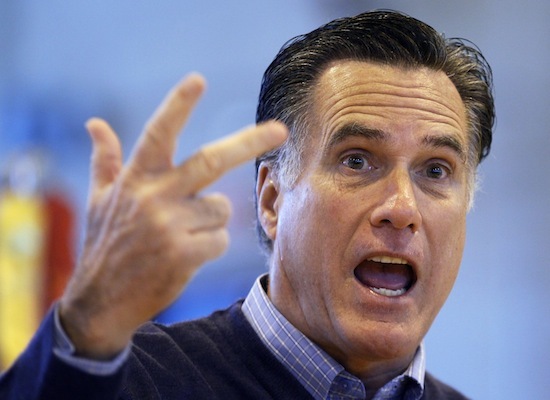
Now that Mitt Romney has locked up all the delegate votes he needs to win the GOP’s blessing as its next presidential nominee, it’s time to stand back and ponder the significance of his hard-earned victory. Here’s my informed, rationally considered take on it (with apologies to a certain late-night animated clay celebrity from the 1970s):
Oh NOOOO!!!
There… that felt good. So why does Romney bring out the Mr. Bill in me? After all, the former Massachusetts governor is a smart, upright, capable, authoritative fellow in his own ruggedly preppie, J. Crew-ish sort of way. So what if he looks like one of those seasoned, graying-at-the-temples male models we see in sportswear catalogs?
Romney might even pass for a moderate on his better days. At least he might when he’s not pandering to his party’s wingnut base or dispensing nuggets of “one-percenter” insight like these during a borderline depression:
Corporations are people, my friend
I like being able to fire people
I’m not concerned about the very poor
My wife drives a couple of Cadillacs
I have some great friends that are NASCAR team owners
I’m also unemployed
Granted, some of the above bon mots appear to be more insensitive and oafish than they were in their original context. But there’s a pattern here… a pattern of chronic insulation from the needs of America’s hurting, dispossessed, downsized and endangered middle class… not to mention the actual poor. That’s dangerous, especially during a time of seething anger, despair and potential unrest. The American Dream is failing most of us right now, and the last thing we need is a president who consorts with Donald Trump and essentially tells us to eat cake. Romney is like Thurston Howell III, the merry tycoon marooned on Gilligan’s Island, but without the old boy’s warmth and charm.
Sensitivity isn’t among Romney’s more noteworthy traits. We’re looking at a man who drove on a family trip with his dog conveniently strapped to the roof of his car (inside a crate, but still!)… who dismantled and rebuilt companies for profit as if they were made of Lego blocks, without regard for the hapless employees tossed onto the street… who, as a wild-and-crazy adolescent, forcibly snipped the long golden locks of an effeminate classmate and professes not to remember.
Can you imagine Lincoln, FDR, Eisenhower or Bush the Elder being so devoid of empathy? Even Bush the Younger would have taken better care of his dog and shed a tear for the outcast employees (though I could see him snipping a classmate’s hair in the spirit of youthful overexuberance).
Was Romney the worst of the Republican candidates this year? Of course not; his competition was, for the most part, a procession of jaw-droppingly shallow and maladroit aspirants to the American throne. But let me say this much in their favor: as right-wing Christian populists, at least the Rick Perrys, Michele Bachmanns and Herman Cains could truthfully say they represented more than one percent of the population. Romney can’t. Still, we can rest a little easier knowing that America won’t become a Middle-Eastern style theocracy anytime soon.
So was Romney the best candidate the GOP could have produced? No again. He wasn’t even the best Mormon candidate. (That honor belongs to Jon Huntsman, who apparently was too sensible and articulate to make a dent among Republican voters.)
Romney is the kind of moderate who gives moderates a bad name. He waffles, he flip-flops, he tailors his utterances to the audience whose votes he needs at the moment — even going as far as to distance himself from his own healthcare reforms as governor of Massachusetts.
In short, as Gertrude Stein once said about Oakland, California, “There’s no there there.” This purported centrist lacks a center, a core of principle and conviction beneath the slick veneer of his “whatever works” operating style.
So who might have made a better nominee than Romney? How about this one: his name is Charles “Buddy” Roemer, and you can be excused if the name doesn’t ring a bell. His resume makes him look like a Southern-fried Romney: former one-term governor of Louisiana, banking executive, Harvard degree (two of them, in fact — including the indispensable MBA).
Unlike Romney, the 68-year-old Roemer is a diminutive fellow with a grandfatherly air, a heart condition and a down-home Louisiana drawl. He’s quick and animated and lacks presidential gravitas, but he continually sounds the right notes. Put an end to partisan bickering. Do something about our convoluted tax code. Solve the student debt crisis. But mostly this: get money out of politics.
Roemer is justly furious with the sinister alliance between big money and American politicians, something few if any other candidates (including Obama) have mentioned because, hey, they need the money. In fact, Roemer refused to collect contributions of more than $100 and wouldn’t allow a “superPAC” to fund his campaign — which probably explains why he never garnered enough support to mount the stage at all those clownish GOP debates.
No friend of party machines, Roemer switched from the Democrats to the GOP a few decades ago and, when it became apparent that the Republicans wouldn’t play ball with him this past year, bolted and ran as a Reform Party candidate. But today, in the wake of Romney’s over-the-top delegate count, Roemer announced that he’s giving up the chase.
Too bad. In its time of need, America could have used a Buddy — in this case, an unconventional, outspoken, even radical moderate who’s unafraid to confront the high-placed puppeteers who pull the strings of our government.
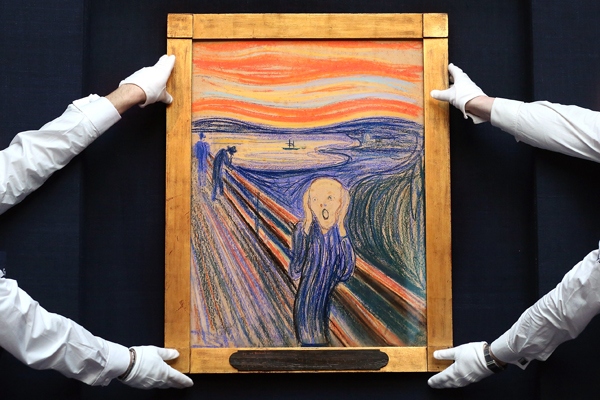
Nearly everyone knows by now that “The Scream” — Edvard Munch’s iconic doodle of modern angst — broke auction records earlier this month when it sold for a few dollars shy of $120 million. In the weeks since, I’ve been thinking more and more about that sale and what it means.
I should confess right up front that I like both “The Scream” and the Norwegian artist from whose tortured mind it sprang more than a century ago. It’s probably not Munch’s greatest work. (That honor could go to “Jealousy” or “The Storm” or “Evening on Karl Johan Street” or any of a half-dozen others.) It’s not even a finely executed work of art by any standard. But who can forget it?
Still, $120 million represents a pretty hefty pile of American cabbage even for an unforgettable work of art, especially during a borderline depression. What else can you buy for $120 million these days? How about 120 vintage mansions at a million dollars a pop… or 3000 years of tuition at an elite American university… or 200,000 42″ flat-screen TVs… or a million hours of psychotherapy… or 10 million medium pizzas, each with two toppings of your choice… or (if you’re really conscientious) 60 million meals for poor people? You get the point.
The kicker is that the $120 million Scream wasn’t even the original that so many of us remember so vividly from our art history classes. In fact, it’s not even a painting. Munch created four versions of his most famous work, one of which was a crudely scrawled pastel imitation of the tempera original (which was pretty crude-looking to begin with). This pastel knock-off is the version that fetched the record sum at Sotheby’s earlier this month. (For that matter, the world’s priciest painting of all time, sold to the Persian Gulf mini-nation of Qatar last year for around $250 million, was simply one of five versions of Cezanne’s “Card Players.”)
Why would otherwise sane people pay a literal fortune for a second-rate copy of “The Scream”? It’s certainly not for the beauty of the image, the quality of the craftsmanship or the need to contemplate a profound expression of the human spirit (you could open an art book for the same experience). It’s not even for the chance to display such a famous image in your home and be the envy of your friends. Nobody would be reckless enough to leave a $120 million investment on the wall where burglars could snatch it, fire could consume it, or the cleaning lady could spray it with Endust.
So why would they buy it? For the bragging rights. For the investment value. Because they can.
For better or worse, the business of serious art collecting has always been the province of the economic elite. Why for better? Because only the elite can afford to lavish such extravagant sums on our struggling artists (especially after those artists are safely dead). From the Medicis to Henry Clay Frick to the faceless Japanese, Arab and American industrialists who keep smashing each other’s bidding records today, the super-rich have essentially run the art business since the dawn of the Renaissance. The more munificent plutocratic benefactors endow great museums or open their collections to the public, a favor for which the public should be decently grateful. By contrast, workers’ societies tend to favor public murals and propaganda posters.
Still, the incursion of today’s überwealth into the art world has produced some strange and unsettling trends…
Sticker shock. Of the 40 most expensive paintings of all time, all 40 were sold since 1987 — fittingly enough, as the Nouveau Gilded Age was taking shape under the smiling eyes of Ronald Reagan. And yes, the prices have been adjusted for inflation. The highest inflation-adjusted price previously paid for a work of art was $35 million for Leonardo da Vinci’s portrait of Ginevra de’ Benci back in 1967. (Not on the “top 40” list, as you probably surmised.)

Would a private owner have the right to destroy a beloved masterpiece like van Gogh’s “Portrait of Dr. Gachet”?
The disappearance of great art from public view. Yes, we can still pay our respects to the Mona Lisa and thousands of other great works in museums around the globe. But the tendency now is for mega-rich buyers to squirrel away their prizes and effectively make them vanish. Case in point: Back in 1990, Japanese paper manufacturing tycoon Ryoei Saito bought van Gogh’s beloved “Portrait of Dr. Gachet” for the then-record sum of $82.5 million ($146.5 million in 2012 dollars). The elderly Saito loved the painting so much that he expressed a desire to have it cremated with him when he shuffled off this mortal coil. Though the painting survived Saito’s demise in 1996, its current whereabouts are unknown.
Saito’s recklessly whimsical desire raises a disturbing question: does the owner of a world-class work of art have the right to destroy it, the way a home buyer can tear down a historic house? Can he paint a purple mustache on it or cut it down to a more compact size if that’s what he wants? It’s his private property, after all. Entrusting great art to private collectors entails a great deal of trust. Maybe we need to designate the finest works as world-heritage landmarks, sacred and inviolable.
A bias toward trendy, overhyped modern artists. Yes, painters of genius like Cezanne, Monet and van Gogh have fetched top dollar; that much is fitting and proper. I’ll even give the clever, overrated Picasso a pass as a groundbreaker of consequence. (He accounts for 10 of the top 40 priciest paintings.) But would you have guessed that the #2 and #3 spots belong to Jackson Pollock and Willem de Kooning? That’s right: in 2006, show-biz potentate David Geffen managed to unload a pair of their inscrutable daubings for $140 million and $137.5 million, respectively. Other “top 40” artists include Francis Bacon, Jasper Johns, Mark Rothko and, of course, that ubiquitous poseur Andy Warhol. (His “Eight Elvises” sold for $100 million in 2008.)
The irrelevance of scarcity and merit. Are the Pollocks, de Koonings and Warhols of the art world really worth so much more than Leonardo? Of course not. And Leonardo has the advantage of scarcity on his side: his output includes only 15 indisputable paintings, some of which were abandoned in the early stages, while others (like The Last Supper) happen to be attached to walls. So why the outrageous sums for Leonardo’s latter-day inferiors? Demand, for one. The overpriced contemporary artists are sexier than Leonardo (in the loosest sense of the word; Warhol wasn’t exactly Don Juan). They’re sexy in the sense that they emit sparks of danger and in-your-face irreverence. And of course, sex appeal routinely outsells nobility or beauty in today’s free market.
The artificial inflation of reputations. A critical issue, and one that partly explains the absence of so many Old Masters from the “top 40” list. Modern artists, like Hollywood celebrities and professional athletes, benefit from a vast, pervasive and free publicity machine that keeps their names in the public eye and inflates their value. When Angelina Jolie’s pillow-lipped face appears on half the magazine covers we see at the supermarket checkout counter, we assume that she’s worth something. No matter that we can’t remember more than one or two of her actual performances; the media continually tell us that she’s a commodity.
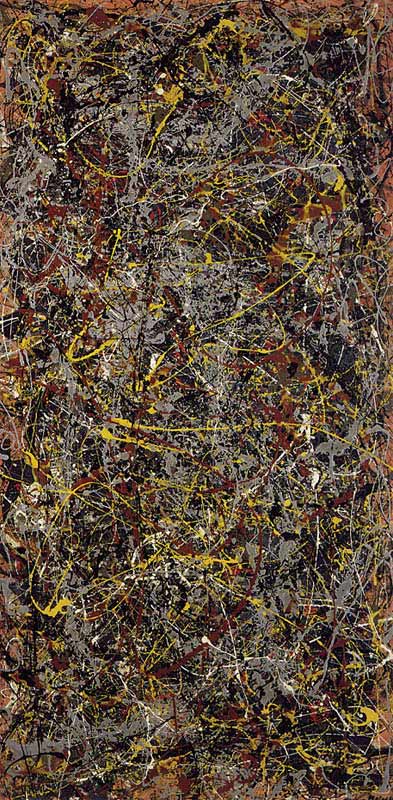
Would you pay $140 million for this painting? Someone did. It’s Jackson Pollock’s “No. 5, 1948.”
The same law holds true for modern artists. They generally don’t make the cover of People magazine, but their names achieve a similar currency within the smaller and tighter art community. Notable art critics and other tastemakers fawn over their works and interpret them for the rest of us. Galleries display their canvases reverently for all to see. Adoring art professors coo over them. Moneyed connoisseurs gab about them at fashionable parties. When a collector pays $140 million for a Jackson Pollock splatterfest, he’s essentially paying for the ultimate designer label in modern American art. Meanwhile, countless artists of superior talent languish in obscurity. They never made the right connections at arty New York soirees.
The influence of contextual pricing. Sounds like an arcane principle borrowed from an economics textbook, but it’s really a simple matter of habit: we become accustomed to paying much larger sums for some types of goods than for other types of goods. For example, I think nothing of spending $150 for a single night in a serviceable hotel, yet I balk at paying $12 for a tempting jar of lime-ginger preserves that could give me pleasure for the better part of a year. Why? Because I know that far too many decent hotel rooms fetch $200 or more a night, while I can enjoy a comparable jar of preserves (though maybe not lime-ginger) for $7 or so. We’ve grown accustomed to hotel rooms, restaurant liquor, college tuition, theater tickets and works of art being grossly overpriced… so we tend not to protest when we have to pay up. Maybe we should protest.
The widening gap between the super-rich and everyone else. Today’s outrageous wealth disparities account for much of the outlandish pricing. After all, we live in a society where Donald Trump commands $1.5 million for a one-hour speaking engagement while the wretches who write for online “content farms” earn $5 an article. Of course the Donald Trumps and their colleagues within the top .001 percent can part with $100 million plus for a work of art; that princely sum represents a few months’ income for their crowd.
In short, the billionaires rule the art world, as they rule over so much else today, from sports to banking to entertainment to politics. No surprise there. We have to appreciate the irony of struggling, perspiring, emotionally and financially tormented artists posthumously earning millions while feeding the egos of billionaires with money to burn. It might be a little more surprising that those billionaires actually take an interest in art. I suppose that’s a good sign, though of course they’ve forever lifted notable art beyond the budgets of petty-bourgeois players like you and me.
If we require any consolation, we can always open our art books or visit the local museum. Better yet, we can buy the works of talented, little-known artists whose works grace the walls of local galleries and coffee-houses. We even can buy ourselves a nice reproduction of “The Scream” for considerably less than $120 million. It’ll be Munch’s original version, too — not his shoddy pastel knock-off. And we won’t have to live in fear that the cleaning lady might spray it with Endust.
Wall Street and China: Perfect Together?
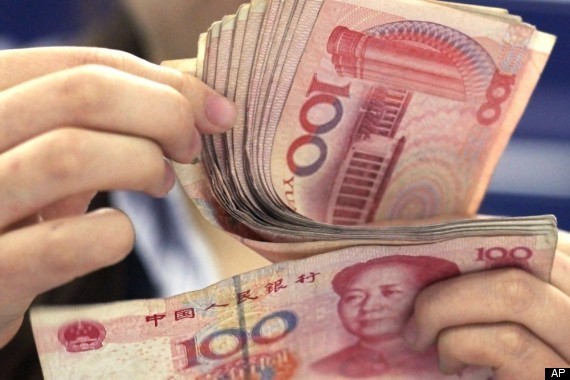
I was feeling haggard and grumbly this morning after a truncated night’s sleep, when I happened to spy the following headline tucked away on page 3 of the Philadelphia Inquirer:
Wall Street, dissed by U.S., seen as moving to China
O joy that cometh in the morning! What could have triggered such an ominously promising headline? Apparently JPMorgan Chase, that venerable behemoth of the banking world, is moving its capital markets chief to Hong Kong.
Not exactly a mass exodus, you say? True enough, but outspoken bank analyst Richard X. Bové sees the move as a portent of things to come. Bové’s contacts in the banking world have dropped hints that other megabanks are planning to follow suit. Why? Let me quote the article, which in turn quotes and paraphrases Bové’s report:
Asia is growing faster than the U.S. and “the bank [JPMorgan Chase] will not be as constrained by U.S. regulators.” More U.S. banks are looking to leave Wall Street for places where they aren’t taxed and treated like enemies…
Bové says his banking industry sources tell him “other giant banks are preparing to move key business outside the United States” due to the “hostile” attitude of the federal and New York State governments. Politicians here “have made their careers bashing banks,” while the Chinese are eager for U.S. banking help.
Waaah!! All they did was precipitate the most dire financial crisis in eighty years, then reap the benefits of a federal bailout that compensated them for their losses. (We middle-class investors should have been so lucky.) And now they sniffle that we don’t like them! That if they can’t make the rules anymore, they’re going home… to China! So be it… I say it’s time we let ’em go!
Come to think of it, Wall Street and China are a perfect fit. Both care more about profits than they do about people. Both would trample their grandmothers and plunder the planet for a little short-term gain. Both are accustomed to operating by fiat; they tend to cast a jaundiced eye on the concept of democracy. Both are intent on spreading their amoral power and influence throughout the known universe.
In short, Wall Street and China deserve each other. These two megalithic, profoundly anti-democratic entities will make a great team, and I wish them a long, happy marriage.
But what about the consequences, you ask? And you’re right to pose the question. Once again, let me quote from the article that quotes and paraphrases Bové:
Losing banks “will dilute the U.S. control over the global financial system” and end the dollar’s role as “the world’s only reserve currency,” Bové writes. That means a weaker dollar, more pressure to pay our debts, higher U.S. interest rates, higher import prices, and a lower standard of living for many Americans.
Sounds pretty much like the world we Americans have been inhabiting for the last decade, only more so. I say bring it on! What’s the worst that can happen? Our economy collapses… then our government breaks down because we no longer have the income to fund it… we revert to a village economy, growing crops and producing quaint handicrafts… we worry less about success and more about bonding with our neighbors. We become a Third World nation, take siestas, smell the roses and celebrate life’s little joys.
I think I could live without Wall Street. Couldn’t you?


 THE NEW MODERATE


