Two Nations, Indivisible
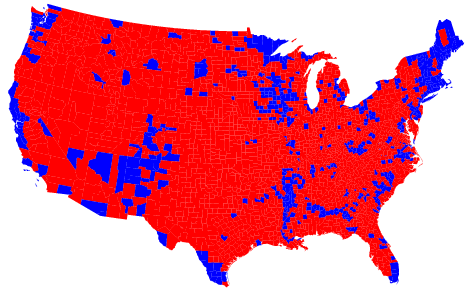
Maybe it is 1860 all over again. Within days after President Obama’s re-election, disgruntled red-state Republicans (and even some terminally alienated blue-state GOP diehards) were petitioning their states to secede from the Union.
Granted, these latter-day rebels were scanty in number and could easily be dismissed as cranks. Secession has been a touchy issue on these shores since the previous Civil War, and our federal government doesn’t exactly help grease the wheels of state secessionist movements.
What made the secession threat intriguing was the accommodating response from so many denizens of the left and near-left: Let them go, and good riddance!
I’d read these mini-diatribes against Red America — that primitive and alien land of old-time religion, gun worship, antipathy toward gays and blacks and foreigners, anti-science obstinacy, substandard grammar and misplaced apostrophes, environmental brutality, cheerleaders with big hair, and on and on. We’re two separate and irreconcilable cultures, proclaimed the blue-state hipsters with their radio dials perpetually tuned to NPR’s squeaky-voiced Ira Glass and whatever obscure music combo happened to be looking edgy at the moment. And it wasn’t just the hipsters: several of my more mature, tax-paying, solid-citizen liberal friends were feeling the same urge to jettison the hicks and get on with life.
As I compared the beefy, godfearing, trailer-dwelling Bubbas with the ironic, compulsively slim, chef-worshipping bicoastal urbanites, I began to wonder if Lincoln made a mistake by attempting to lasso the Confederate states back into the Union. All those hundreds of thousands of gallant young warriors cut down in their prime — for what?
In 2012 the United States seems to consist of two peoples inhabiting opposite sides of a deep gorge. The bridges are down, and

These finches evolved into separate species because they became isolated on separate islands. Is this the future of America?
the two cultures are evolving away from each other. Eventually, like Darwin’s finches on their isolated islands, they could emerge as separate species. Maybe we needed to go our separate ways after all.
Then I came to my senses. First we had to consider the thorny logistics of dismantling the republic. What if a hipster magnet like Austin wanted to secede from Texas? What if the hillbilly stronghold of central Pennsylvania decided to go rogue and cut the cord from Philadelphia and Pittsburgh? We’d make the pre-Bismarck patchwork of petty German kingdoms and duchies look like a unified empire by comparison.
More important by far, we needed to think about the shared qualities that brought us together in the first place — aside from our boiling resentment of the taxes imposed by good old King George III. Surely a people that collectively loves pizza, movies and beer can join forces once again for the common good.
But even there, chances are that the blue-staters would prefer white pizza with artisanal goat-cheese topping, small independent films and microbrew beer, preferably from Belgium. The red-staters would gladly take pepperoni, blockbusters and Budweiser. Is there any hope?
What made us — all of us — a unique people known to the world as Americans? Was it our willingness to abandon ancestral roots for the chance to start a fresh life? Our bold spirit of pioneering, discovery and enterprise? Our national preoccupation with success? Our ability to welcome and assimilate newcomers from a hundred nations? Our admirable balance between rugged individualism and community spirit? Our willingness to help our neighbors — even if they lived halfway around the world? Our good-natured, down-to-earth irreverence in the face of airy pretentiousness (a trait embodied by native American philosophers like Mark Twain and Will Rogers)?
I’d vote an emphatic “Yes!” to all of the above. So what happened?
First, the ’60s happened. Traditional values came under assault by scruffy young radicals, and the traditionalists rebounded by digging in and rebelling against the rebels. Soon enough it turned into a shouting contest: Rush Limbaugh bellowing against the mushy entitlement state… liberals heaping infamy on the banksters… Bush Derangement Syndrome followed swiftly by Obama Derangement Syndrome… Republicans refusing to cooperate with Democrats… red-staters and blue-staters morphing into grotesque self-caricatures… Twitter mavens tweeting to their own amen corners… contentious opinions swirling in cyberspace, growing more and more distorted and snarky and intolerant of dissent… age-old friendships ending abruptly with a flurry of political and cultural fisticuffs.
It doesn’t look promising at the moment. A grueling, open-ended recession (no apparent light visible yet at the end of this tunnel) has frayed our national nerves, fueled hostility and exacerbated our differences. The haves are pulling blithely away from the have-nots, and (most alarmingly) the middle class is joining the underclass in an unhappy and unexpected alliance of the downtrodden. Upward mobility is virtually dead unless you’re already up (with a little effort, members of the elite can grow still eliter).
We begin to look more and more like a Latin American republic, even without considering the vast numbers of unassimilated Spanish speakers in our midst: a small, self-entitled upper crust and a vast peasantry, separate and unequal.
But this is the United States of America, you insist. We have our pride. Our history and our legacy are at stake. What can we do to rouse ourselves, reunite ourselves, restore a sense of common purpose?
I have an answer (not the answer, because nothing is that simple these days. But any answer is better than none). And my answer is simply this: stop thinking in terms of “us” and “them.” See individuals. Individuals who are just as proud, ornery, flawed, confused, scared and magnificent as we are. Like all living organisms, they simply want to survive, thrive and pass the baton to the next generation.
If we want a baton to pass along, we’ll have to stop hunkering down in our ideological bunkers. We need to step outside, breathe some fresh air and wave to our neighbors on the other side of the chasm. Then we need to repair the bridges that broke down over the past few decades. We don’t want to evolve into two separate and incompatible species, do we? After all, we’re not finches… we’re Americans.
Election Night 2012: Is It 1860 All Over Again?


We couldn’t have asked for a more portentious finale to a hard-fought presidential campaign. The swirling storm swept up the Atlantic seaboard, emptied its wrath on the Jersey shore, battered lower Manhattan and the southern shore of Long Island, and produced scenes of Old Testament destruction before it veered inland. Any soothsayer worth his sooth would have quaked in fear of its occult meaning.
Coming as it did a week before a bitter election, the monster hurricane with the disarming name took our minds off partisan politics for a moment. But make no mistake, America on Election Night 2012 is more sharply divided than at any time since 1860. That year, with the nation already barreling inexorably toward Civil War, the election of a moderate anti-slavery Republican named Abraham Lincoln over his Democratic archrival Stephen A. Douglas was enough to break up the Union.
Tonight, no matter whose name flashes on our TV screens when the networks reveal their final projections, we’ll be sliding toward the most contentious era in our history since the last four years — but even more so.
Conservatives hate Obama with a passion generally reserved for the Vietnam-era Jane Fonda. They proclaimed him a socialist, even though his domestic policies would place him slightly to the right of Richard Nixon. During his first term they continually attacked his legitimacy and even his nationality; the Republican majority in the House went out of its way to thwart his every move, even at the expense of the country as a whole. Then, naturally, they blasted him for his lack of accomplishments.
Liberals, for their part, fear that a Romney presidency (and particularly a Ryan vice-presidency, which goes with the package) would propel us even more speedily toward a winner-take-all society — a latter-day Yankee replica of Latin American republics with their self-pampering upper classes and impoverished peasantry. They excoriate the Michigan Mormon for his shape-shifting policies, his slippery penchant for saying whatever he needs to say to win votes at the moment: conservative when stumping for his party’s nomination, moderate when appealing to the national electorate, and who-knows-what after he takes office.
The reality is that both nominees are more moderate than their supporters. Yet each man has come to symbolize the rampant polarization that defines America in 2012. We’ve been torn asunder by financial collapse, endless unemployment, corporate outsourcing, growing wealth disparities, abortion, guns, race, religion, gay rights, the insatiable greed of bankers and the insatiable needs of the unfortunate. We’ve taken sides like a land split down the middle by an earthquake, with most of the populace on one side or the other, and only a sprinkling of hardy souls occupying the middle.
The polarization of America has been fueled not only by hyperpartisan politicians, but by the tireless militancy of Twitter extremists and Facebook fanatics. These chatty radicals are something new on the American scene; they preach to a homogeneous choir in a vast echo chamber that raises the volume and distorts opinions until there’s no possibility of compromise with the enemy.
As a wise Republican once warned us, “A house divided against itself cannot stand.” The winner of the 2012 presidential election must work to find common ground between America’s dangerously overheated liberals and conservatives. It shouldn’t take a disaster like Hurricane Sandy to unite partisan warriors like Obama and New Jersey Governor Chris Christie in brotherly affection. If Americans refuse to unite, we’ll have an even more devastating disaster on our hands.
LATE-BREAKING BULLETIN: It’s Obama! The president won narrowly in most of the battleground states, and it was enough to put him over the top. Romney conceded late but graciously, and Obama’s victory speech should have been enough to convince (nearly) all doubters that this president wants to be a uniter. Now it remains to be seen if the Republican Congress (and all those fervent Tea Partiers out there) will let him govern.
Final Debate Recap: Obama vs. the Land Shark

Most reasonably objective viewers (and even a few conservative ones) scored the third and final presidential debate as a solid win for Obama. After his widely panned performance in the first debate, the president rallied to take the best-of-three series. But presidential politics isn’t as simple as a baseball playoff, as we’ll see.
In that third debate, Obama never looked better: relaxed yet authoritative, appropriately serious yet animated by a mischievous wit. His “horses and bayonets” retort to Romney’s irrelevant lament about the shrinking size of our navy was sheer comedic inspiration:
You mentioned the Navy, for example, and that we have fewer ships than we did in 1916. Well, Governor, we also have fewer horses and bayonets, because the nature of our military has changed. We have these things called aircraft carriers, where planes land on them. We have these ships that go under water, nuclear submarines.
Romney, for his part, played it safe and low to the ground. This was a foreign affairs debate, after all — and if the former chief of Bain Capital has an Achilles heel, this is it. His gaffe-a-minute overseas tour this past summer is still fresh in our memories. But Romney watched his words, committed no bloopers, smiled frequently (if a little nervously) and practically endorsed his opponent’s foreign policy.
Some observers noted that the Republican nominee was sweating in the time-honored tradition of Richard Nixon. I didn’t discern any telltale droplets myself, even on my high-def TV, but Romney looked as uncomfortable as the president looked assertive and commanding. It was the polar opposite of the first debate.
So shouldn’t the Republican faithful be panicking right now? Shouldn’t they be alarmed that their nominee gave the kind of passive, milquetoast performance that earned Obama such opprobrium in the first debate?
Of course not. It was all part of the plan, you see. Romney needed to boost his credibility among undecided moderates — and especially female undecided moderates. What better way to say “Vote for me, ladies” than to present yourself as a mild, peace-loving guy… a “safe” Republican, not one of those strident and bellicose apostles of American exceptionalism (not to mention unfettered capitalism and upward mobility for the already-rich). We were looking at a Mitt Romney who wouldn’t have been out of place talking to a women’s book group or chatting it up with Oprah (if Oprah were still chatting it up with anyone).
This carefully manufactured “safe” Romney,one of his many incarnations over the past year, reminds me of a classic skit from the early glory days of “Saturday Night Live.” There would be a knock at the door, followed by a garbled voice (SNL veteran Chevy Chase) asking incoherently for a Mrs. Somebody-or-Other.
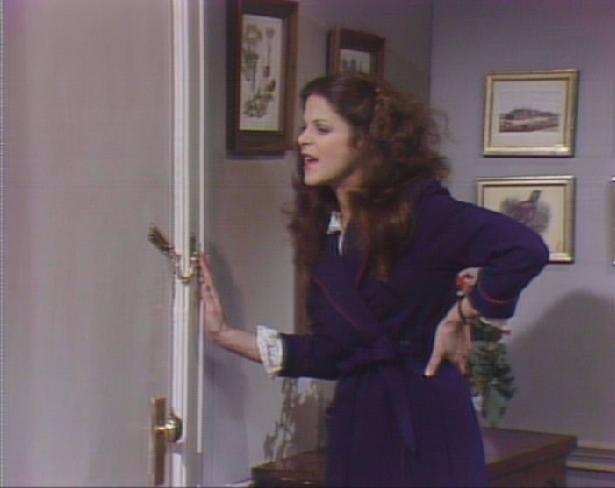
Gilda is a little suspicious of the mumbling voice outside her door, but she’s easily persuaded.
Gilda Radner, stretched out on her couch, asks him what he wants. “Plumber,” comes the faint reply.
When Gilda tells him she hasn’t called for a plumber, the voice changes his story. “Telegram,” he mumbles. So Gilda rises from her couch, opens the door and is promptly devoured by the voracious “land shark.”
Later, in the forensics lab, a rattled John Belushi tells his associate (played by Dan Aykroyd) that the land shark is “the cleverest species of them all.”
In the next scene, Laraine Newman is lounging on her sofa when she hears the knock at the door. There’s the same mumbling, incoherent voice: “Flowers… plumber, ma’am.” But Laraine is on to him.

Laraine is even more skeptical, but she succumbs to the land shark anyway.
“I don’t need a plumber,” she retorts. “You’re that clever shark, aren’t you?”
“Candygram,” comes the faint reply.
“Candygram my foot!” says Laraine. “You’re the shark and you know it.”
“I’m only a dolphin, ma’am.”
That does the trick. “A dolphin? Well, OK.” Laraine lets him in and gets devoured on the spot.
Is Romney really a land shark? I don’t know… and that’s the problem.
Does anybody know who this guy is? All we know is that he’s been claiming to be the Candygram man lately — and frankly, I wouldn’t advise anyone to open that door.
Obama Strikes Back with a Left to the Chin: The Second Debate as Political Slugfest

I miss the days when heavyweight boxing loomed large over the American cultural landscape. The great champs were men of mythic stature — Jack Dempsey, Joe Louis, Rocky Marciano and (most mythic of all) Muhammad Ali. Then the sport deteriorated like a jack o’ lantern two weeks after Halloween.
The hulking, ear-biting Mike Tyson is the last heavyweight champ whose face I can remember. An upstart named Evander Holyfield followed him, and I couldn’t name you a single one of Holyfield’s heirs. The sport has trailed off into insignificance, replaced by video games, reality TV and presidential debates.
Yes, our presidential debates are the next-best thing to the heavyweight bouts of yore. Especially the town hall debates, which allow the candidates to get up from their seats, move around and invade each other’s private space.
The defending champ and his Republican challenger met this past Tuesday for the second in a best-of-three contest. Both men entered the ring in fighting trim: tall, lean and energized… not an ounce of flab around the waist or skull, boyish hairlines intact. Romney at 65 was looking more unnaturally youthful than his 51-year-old rival, whose arduous three-plus years in the White House have taken a visible toll.
Obama, recovering from his lethargic TKO loss in the first debate, needed to show the world that he could still catch fire and pack a well-aimed punch. The Republican challenger, who had the momentum along with a paper-thin edge in the polls, simply needed to look like a champ while successfully dodging and weaving in the ring.
Romney came out of his corner in response to a college student who wondered aloud if he’d ever find a job. The Marauding Mormon conveyed friendly concern and instantly promised him gainful employment. Romney was being Romney: the smooth, upbeat, ideologically elusive plutocrat who’s gallantly forcing himself to sympathize with ordinary middle-class Americans.
Now it was Obama’s turn: the president surprised the doubters with a show of renewed moxie. Energized, intense and combative, he quickly brandished his own credentials as a Certified Friend of the Middle Class and repeatedly put his opponent on the defensive. Obama jabbed Romney again and again, knocking his opponent’s faith in “top-down economics”… his mysterious promise to roll back the deficit while cutting taxes (“the math doesn’t add up”)… his flip-flopping on illegal immigrants and Obamacare… his haste to make political hay out of the Libya consulate attack… his fealty to the GOP’s right-wing fringe in general and the National Rifle Association in particular.
But despite his adroit maneuvers, Obama never put his opponent away with a decisive knockout punch. Romney countered with jabs of his own: Obama’s broken promises, lingering recession, billowing deficit, sluggishness in drilling for oil, mishandling of Libya, prohibitive taxes on American companies. But again, nothing fatal. Each attempted to paint himself as a moderate while his opponent quickly defaced the self-portrait.
Both men, masters of self-control under less stressful circumstances, began to frazzle visibly midway through the bout. Romney grew prickly and impatient; the president quietly fumed and sulked. But neither man collapsed. Each danced defiantly onto the other’s turf. Both abused their allotted time slots; both wrangled with the referee, CNN’s Candy Crowley, she of the feisty humor and tanklike physique –and no pushover in the ring.
All the while, often nervous and fumbling, the hand-picked inquisitors — a gathering of undecided, mostly white Long Island voters — tried to extract straightforward answers from the two combatants. Not much luck there. In the end, nobody asked the most important question of all: What will you do to stop lobbyists and big-money interests from buying our elected representatives? If I had been in the audience, that’s the question I would have asked… though it might not have made it past the censors.
The most decisive action came late in the match. In response to an audience member’s challenge for Romney to differentiate himself from the unfortunate George W. Bush, the Mittster appropriately cited his faith in small business (as opposed to big corporations) as the engine of growth and progress. Obama also drew a contrast between the two Republicans — and scored a minor coup by providing evidence that Bush the Younger was actually more liberal than the current GOP nominee! Then, in his closing statement, the president finally pulled Romney’s infamous “47%” remark out of his hat.
The victor: Obama on points — not a knockout — not even a TKO — but still an encouraging turnaround for the embattled chief executive.
It strikes me as odd and unseemly that our presidential elections increasingly hinge on the combatants’ skill in the debating ring. Debates favor quickness, glibness, style and maneuverability over substance and character. Not exactly the kind of screening process we need to recognize a great leader… but one that’s suited to a nation in thrall to pop culture and its mandatory slickness.
George Washington, perhaps the single most magnificent character to emerge from the entire 400-year American pageant, wouldn’t have stood a chance in a televised debate. A reluctant speaker, starchy and slow of wit, he would have sputtered and mumbled through his grotesque false teeth while a Romney or an Obama shredded him alive. But after all, folks, that’s show business.

Hard to believe (isn’t it?) that as I write these words, less than a week has passed since the first debate between Mitt Romney and the embattled occupant of the White House. Hard to believe that less than a week ago, the Romney campaign appeared to be imploding.
The Mittster’s notorious “47 percent” remark, uttered behind closed doors to a group of supporters and promptly leaked to the public, seemed to crystallize the GOP nominee’s image as a staunch and clueless plutocrat — an arrogant member of the privilegentsia who could blithely dismiss nearly half the U.S. population as freeloaders. It was only the latest in a long line of oafish remarks uttered by an otherwise intelligent, competent and supremely slick public servant. But coming as late as it did in the 2012 campaign, the ill-chosen quip seemed to seal Romney’s fate.
What a difference a single debate can make.
Within minutes after the closing remarks in Denver, America’s vast media machine unleashed a swirling torrent of punditry, nearly all of it blistering in its criticism of Obama’s performance. “Calamitous” seemed to be the general consensus. Romney, they agreed, appeared sharp, well-prepared and eager to win, while the president essentially slumbered through the most pivotal evening of the entire campaign.
Even within the ranks of Obama’s supporters — especially within those ranks — the disgust overflowed like hot lava from a long-dormant volcano. Liberal icon and generous Obama campaign donor Bill Maher wondered aloud if the president had spent his $1 million gift “on weed.” Even The New Yorker, that bastion of urbane progressivism, issued a cover cartoon that carried the most damning possible image of the debate: it depicted Obama as an empty chair.
I watched the debate that evening and I have to admit I was blindsided by the intensity of the Obama-flogging that followed. I actually thought the debate was a draw — a conclusion that probably nullifies any pretense to political omniscience on my part.
The way I saw it, Obama said the right things and said them well (if not forcefully or memorably by his standards). He came across as a model of concerned rational moderation: supportive of America’s beleaguered middle class… a champion of small business as the driving engine of the economy… commendably eager to reward businesses that hire American workers.
Romney, for his part, looked smooth and energized. He engaged his opponent forcefully but cordially, and generally took the high road. That much is praiseworthy. But he also told enough whoppers to turn his nose into a telephone pole. Liberal website ThinkProgress enumerated “27 myths” that Romney unfurled during the 38 minutes that he held the floor.
What I noticed at Romney’s end was an abundance of weaseling — not outright lies (though there were enough of those, too), but clever evasions calculated to rebrand the GOP’s elusive shape-shifter as a stalwart champion of the middle class. Example: Challenged on his scheme to cut taxes for the nation’s economic elite, Romney repeatedly countered, “I will not put in place any tax cuts that will raise the deficit.”
That’s right, Mitt: you’ll compensate for your tax cuts on the rich by cutting federal support for education, the environment and Big Bird. Anyone can see that, right? Mr. President? Care to comment? [Faint snoring sounds emanating from Obama’s lectern.]
So yes, Romney succeeded in slipping some big ones past the president. He looked animated where the president looked worn and depleted; he drove the debate, deliberately slinked from the right to the center and danced around his opponent, who was too tired, demoralized, indifferent or simply unprepared to take advantage of all those glaring opportunities for potential counterthrusts. And yet, if I had to score the debate on content alone, I’d still call it a draw. Obama committed no gaffes; he didn’t sweat or stammer; he simply told his side of the story. But it wasn’t enough.
Contemporary Americans, of course, are addicted to style — the flashier the better. That’s why Lady Gaga earns more than your average tax accountant. Back in 1960, Nixon famously “lost” his televised debate with Kennedy because he appeared haggard and unshaven. (He had just recovered from an illness and had lost several pounds.) Yet those who listened to that same debate on the radio generally proclaimed him the winner.
Obama is nothing if not a master of style, but a difficult presidency has taken its toll on the man who crusaded so brilliantly for hope and change just four years ago. He can still flash that winning smile, but he flashes it less frequently now. What a stinging irony that the silver-tongued orator lost the debate on style points to the starchy Mormon from Michigan!
In fact, the lingering image of Obama from last week’s debate is that of a numb, chastened, unhappy man staring down at his notes with a petulant frown. He had good reason to be unhappy, even on his twentieth wedding anniversary. He had just been sideswiped by an opponent who was rebranding himself with each new statement, and no amount of note-taking was going to salvage the evening for him.
Romney made himself immune to attack simply by dodging and denying his previous positions, and Obama didn’t know how to bring down a moving target. The rational Mr. Spock was no match for a Mighty Morphin Power Ranger.
One particular image of Romney lingers in my mind, too. I couldn’t find a photograph that perfectly captured its essence, but I’ll try to describe it for you. It was the image of Romney listening to the president, his craggy L. L. Bean male model’s face fixed in a condescending but curiously indulgent smile. It was the look of a father listening to his ten-year-old son telling him that the dog ate his homework. It was the visual equivalent of Ronald Reagan’s “There you go again.” It was well rehearsed, and it was unnerving.
The fatherly glow in Romney’s eyes seemed to radiate kindness, but it was the cursory kindness of a wealthy man who was decent enough to listen to a street beggar’s sob story. It projected a sense of assumed superiority. It was the look of a man who knows that his authority and social position are unassailable. And as a tactical weapon in a debate with a sitting president, it was pure genius.
Solving the Voter I.D. Controversy in 500 Words or Less
I’ll keep this one short, because we’re looking at one of the simplest issues ever to cause mass consternation across the republic. I know we don’t need to resort to fisticuffs, because the solution is so self-evident (except, apparently, to all the combatants on either side). Let’s see if you agree.
It seems the individual states can decide how much (if any) identification their aspiring voters must flash when they go to the polls. That’s fine… it helps prevent voter fraud. As of this writing, nine states require a photo I.D. and six other states “request” it. (Sort of like those museums that “suggest” a $15 “donation” at the door.)
Most of us already count a photo I.D. among our possessions because most of us have state-issued driver’s licenses. But some 11 percent of voting-age Americans don’t. That number soars to 25 percent among African Americans and 16 percent among Hispanics… presumably because impoverished urbanites tend to forgo car ownership in favor of public transportation. So naturally the nation’s minority advocates are howling about a Republican plot to keep people of color from casting their preponderantly Democratic votes.
I can understand their apprehensions: shades of Jim Crow, the poll tax and all that. But it’s really not a nefarious scheme to disenfranchise left-leaning minorities. You see, the photo I.D. requirement also affects senior citizens, the majority of whom are certifiably white and Republican. Some 18% of golden-agers lack the compulsory card. I’d also guess that a healthy swatch of the big-city yuppie population goes carless (and cardless) as well, because the cost of parking is positively prohibitive in the fashionable downtown districts of our larger metropoli.
So no, it’s not a matter of race or even political finagling; it’s just another example of government obtuseness at the state level. If you’re going to require photo I.D.s at the voting booth, then you need to ISSUE photo I.D.s to all the eligible voters in your state. We’re not talking brain surgery here. It’s the only fair solution, and everyone seems to be overlooking it because it’s so confoundedly simple.
Ah, but where will all those non-driving minorities, seniors and yuppies find a place to have their official photos taken? Easy. It’s called the motor vehicle bureau. Most big cities have several of them, and anyone can reach them via public transportation.
If a state is adamant about requiring photo I.D.s on Election Day, let them issue photo I.D.s through the motor vehicle bureaus. Set up two lines: one for voters who drive, one for voters who don’t. Or let them all stand in the same line and simply mark “non-driver” on their application. They pay their $20, $40 or whatever to defray the cost of the procedure… and a few weeks later they receive their shiny photo I.D. in the mail. Problem solved. Everyone votes — except for the 40 percent or so of eligible American voters who typically don’t show up at the polls. Their loss.
The Prophet Motive: Islamists on the Rampage
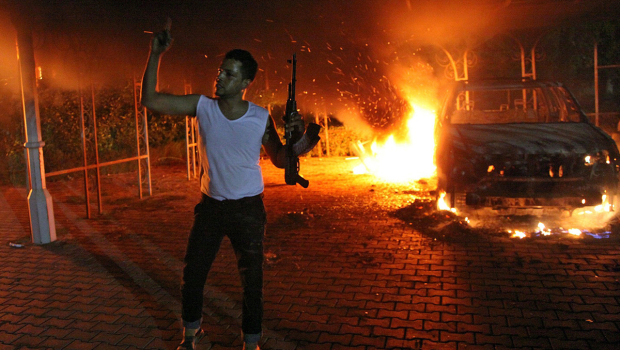
The Islamic world is ablaze, and once again the target of the Islamists’ wrath is (guess who) the United States. The protests started in Egypt and quickly spread to Libya, where popular American ambassador Christopher Stevens and three others died when a band of miltants torched the U.S. consulate in Benghazi. Now the wildfires have spread to a dozen nations within Mohammed’s realm, that harsh and stony empire of fanatical faith that stretches from Morocco in the West to Indonesia in the East.
Why the sudden outpouring of hatred and vengeance in lands that were supposed to have been transformed by last year’s Arab Spring? Did the U.S. government offend Muslim sensibilities by admitting Israel to the union, or by declaring a holy war against Iran… or by outlawing the construction of an Islamic recreation center near Ground Zer0? No, the Islamists have been on the rampage because a lone American con man and ex-convict made an amateurish, disjointed, absurdly dubbed, almost incomprehensible 14-minute video, “Innocence of Muslims,” that denigrated the holy reputation of the Prophet.
The supreme irony is that the filmmaker is an Egyptian living in the United States. Nakoula Basseley Nakoula, who went by the pseudonym Sam Bacile and claimed to be an Israeli, had a legitimate ax to grind with Islam: he’s a Coptic Christian, member of an ancient
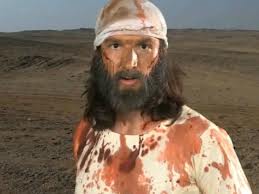
Nakoula’s bloodstained Mohammed from “Innocence of Muslims”
church that Islamists have been targeting in Egypt for decades. The assaults escalated after Egyptian strongman Hosni Mubarak fell from power, and dozens of Copts have died during attacks on churches (as well as from lethal force used by police during the resulting protests).
Nakoula Nakoula’s film begins with such an attack: Muslims terrorizing Christians in contemporary Egypt. Forced into hiding, a Christian family attempts to make sense of the violence, and the filmmaker suddenly cuts back to the time of Mohammed. The young prophet is portrayed by a handsome enough actor… but of course any visual portrayal of Mohammed is considered a crime against the Muslim faith. (If Christians had implemented such a rule for depictions of Jesus, every notable Renaissance artist would have been beheaded.) The film goes on to portray Islam’s founder as an increasingly promiscuous, intolerant and violent fanatic — a portrayal that, for obvious reasons, wouldn’t go over well in the Islamosphere.
Most of us would be justifiably angered to see Jesus or Moses portrayed in such a light. But here’s the point: we wouldn’t shed the blood of innocents because of an objectionable movie. It would be nearly impossible to imagine Presbyterians, Methodists or Reform Jews setting mosques ablaze after watching a stupid 14-minute video. That’s the difference between Islam and the two older Abrahamic religions.
The more fanatical followers of Islam — and their numbers are too great to be dismissed as a fringe element — still believe in collective guilt, that savage and primitive relic of Old Testament justice in which the sons can be blamed for the sins of their fathers, and the innocent can be punished along with the evildoers. It’s a nasty ancient tradition. Think of Jehovah cleansing the world of virtually its entire human population — babies, granddaddies and all — during the Great Flood… think of the plagues visited upon the innocent firstborn sons of Egypt… think of the wanton, divinely-sanctioned slaughter of Midianites and other tribes that stood between the Israelites and their Promised Land. Think of the centuries-long persecutions of Jews by the Catholic Church, based on the senseless notion that all Jews were to be held culpable for the crucifixion of Jesus.
Christians and Jews have left those ugly relics behind, but the Muslim world seems to be stuck in a medieval time warp. Moderate Muslims, civilized and educated, tend to keep their voices down and hope that the rabid element simply goes away. It makes sense: they’d rather not live with a fatwa dangling over their heads.
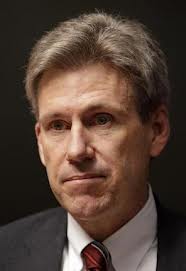
The late Ambassador Stevens: most Libyans liked him
The New Moderate hopes that the murder of Ambassador Stevens, who devoted his life to the Muslim world and was well-liked by his hosts in Libya, could prove to be a turning point: moderate Muslims finally took to the streets and, with admirable grit, carried placards denouncing the crime. Even if their English was broken, their sentiments were whole: there could be no forgiveness for hooligans who murdered Americans because of a film produced by a renegade individual. Unlike the fanatics, they recognized that the notion of collective guilt is a mass injustice.
Meanwhile, in the West, right-wing Obamaphobes (not to mention the ostensibly “moderate” Mitt Romney) were ganging up on the president for “apologizing” to the terrorists. Internet message boards buzzed with rabid denunciations of our purported Muslim-in-Chief. Sorry, folks… it was the American embassy in Cairo that made the conciliatory remarks, not Obama. Other internet sites displayed grisly photos that purportedly showed vengeful Muslims dragging Ambassador Stevens’ soot-covered body through the streets in a triumphal procession. No again… the photos actually depicted Muslims who rushed to Stevens’ aid and carried the dying diplomat to a hospital, where he was pronounced dead from smoke inhalation.
Fanaticism represents humanity at its most hysterical and most dangerous. Whether the fanatics are radical Islamists, fringe right-wingers, communists or fascists, all that misguided intensity can blind us to the truth. Fanatics see only what they choose to see.
Fanatics seem to be especially bent on vengeance when their beliefs are challenged. Their rigid fundamentalism gives them a sense of rock-solid security in a notoriously unpredictable universe. Take away that certainty, and all they have is a botched life and certain death to show for all their efforts.
Citing chapter and verse makes fundamentalists feel more at ease in the cosmos, and there’s nothing wrong with that. But the time has come for all religions to recognize that their faiths are just that: faiths. Nobody has proof. No religion has an exclusive pipeline to the will of God. No religion can claim, with any validity, to possess books dictated by the creator of the galaxies. Religions have sprung from the inventive mind of man; God is who he is regardless of what we believe he is (or isn’t).
God, if he exists, would have to be far greater and more mysterious than the often petty patriarch who emerges from our ancient scriptures. No sentient being who invented atoms and gravity could possibly subscribe to simpleminded concepts like collective guilt. And I say thank God for that!
You can view “Innocence of Muslims” — all 14 minutes of it — here. And be sure to check the comments section if you want to sample the unbelievable vitriol that this film has unleashed.
What We’ll Remember About All Those 2012 Democratic Convention Speeches
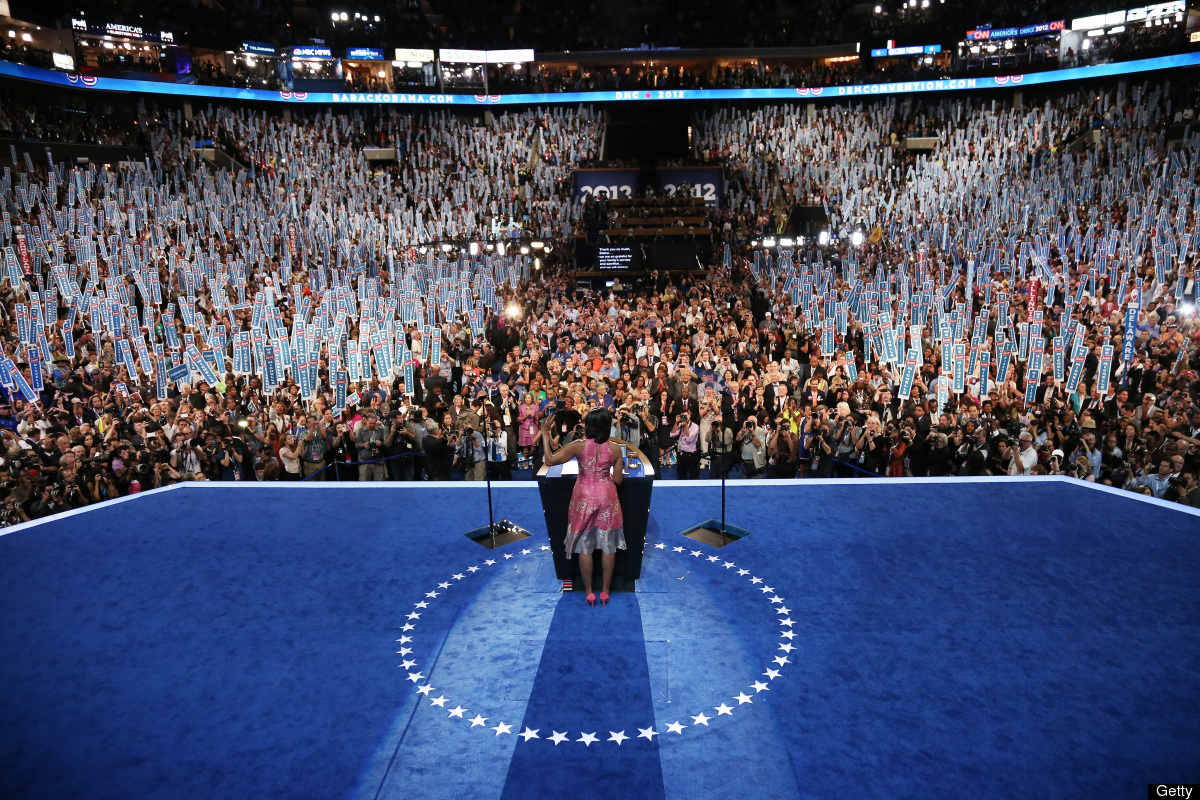
Now that the 2012 Democratic National Convention has winked into history, a dozen or so memorable moments continue to glow like embers in a late-evening fireplace.
Michelle Obama electrified the faithful with her passion, eloquence and wifely devotion… she could add a good ten years to any man’s life  expectancy, especially if that man has been thwacked repeatedly by diehard partisan foes.
Massachusetts senatorial candidate and presumptive Cherokee Elizabeth Warren, an emerging folk-hero for the NPR set, delivered a stirring tribute to scrappy middle-class virtues, along with a persuasive retort to Mitt Romney’s assertion that “corporations are people, my friend.” Warren quoted from her popular campaign t-shirt and posters: “No, Governor Romney, corporations are not people. People have hearts. They have kids. They get jobs. They get sick. They cry, they dance. They live, they love, and they die, and that matters.”
Youthful baldy Cory Booker, Newark’s idealistc, ever-charismatic mayor, galvanized the crowd with his patented Energizer Bunny performance… the guy is a walking, talking electrical power source who could still have a future in national politics.
Highly heralded San Antonio mayor Julian Castro, introduced by his identical twin brother, slipped gracefully into the brilliant-young-minority keynote speaker role perfected by an upstart named Barack Obama back in 2004… though his winsome three-year-old daughter almost stole the show by primping adorably for the cameras.
Prematurely grizzled political fireball Rahm Emanuel — former Obama chief of staff and current Chicago mayor — managed to breeze through his brief tribute to his former boss without uttering a single expletive. Miraculous.
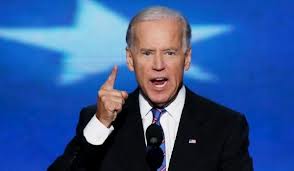 Ditto for the sometimes bumbling, always upbeat VP Joe Biden, who surprised the crowd with a genuinely moving hymn to the U.S. auto industry and its embattled workers (not to mention the president’s role in rescuing them from certain doom). He was at his best when he spoke quietly and convincingly about the importance of the industry to America’s cultural psyche… the kind of intangible value that a pragmatist like Romney would overlook in favor of the accountant’s balance sheet.
Young, articulate and eminently telegenic, the newly minted feminist icon Sandra Fluke castigated Romney and Ryan for their alleged insensitivity to women’s reproductive issues. Noting the deep divide between Democrats and Republicans on abortion, she described “the two profoundly different futures that could await women—and how one of those futures looks like an offensive, obsolete relic of our past.” At least she didn’t call for public funding of late-term abortions.
Former Michigan governor Jennifer Granholm must have been a cheerleader back in high school. Shouting herself hoarse, arms waving wildly to and fro, she tallied the number of jobs saved by the Obama administration in half a dozen states, culminating with (of course) Michigan. (“211,000 good-paying, AMERICAN jobs!,” she yelled triumphantly.) Loud enough to make the average TV viewer adjust the volume, she scored a solid extra-base hit with her fellow Dems in the convention hall.
Instead of geriatric cowboy-director Clint Eastwood, who inadvertently delivered the most memorable remarks of last month’s GOP convention, the Dems mounted an eye-appealing parade of show-biz celebrities-du-jour and recent celebrities-du-jour, none of whom added much of substance to the proceedings. The Democrats seem to relish their role as the party of choice for Hollywood’s pretty faces.
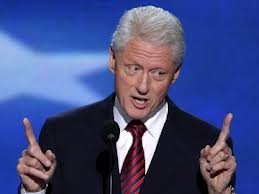 Former President Bill Clinton lent his own superstar lustre to the convention. The aging Arkansas Fox, weighing midway between trim and anorexic (he’s gone vegan since his two close encounters with coronary disaster), blasted it out of the bleachers and then some; his 48-minute oration in praise of Obama garnered the highest plaudits of the convention from pundits and politicians alike.
First he disarmed the opposition by praising virtually every Republican president since Eisenhower, but he contrasted those honorable gentlemen with today’s obstinately partisan GOP. Blasting the “right-wing factions that have taken over the party,” he shredded Romney & Co. by cleverly reframing the reasoning behind their pursuit of Obama: “We left him a total mess [in 2008], he hasn’t cleaned it up fast enough, so fire him and put us back in.” He astutely characterized the president as “a man who’s cool on the outside but who burns for America on the inside.”
As with any vintage Clinton speech, his Charlotte barnburner managed to fuse passion, policy and plain old common sense into a clear and compelling message. But this one had something extra: a righteous defense of the basic Democratic (as well as small-d democratic) ideals currently under assault by conservative ideologues. CNN anchor Wolf Blitzer immediately canonized the speech as the greatest of Clinton’s career, and other talking heads quickly followed suit.
I was simply relieved that Clinton didn’t keel over at the lectern, but I had to agree that the speech was a personal and political triumph. Unfortunately, the ex-president raised the bar impossibly high for the current president, essentially playing the hot-blooded Captain Kirk to Obama’s cerebral Mr. Spock.
Spock delivered, though. Barack Obama deliberately shed the mythic poetry of his previous convention speeches in favor of a more sober and presidential address that reflected his hard years at the helm.
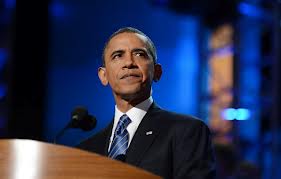 Looking fit and confident, Obama managed to hit most of the right notes for a liberal leader who governs from the center: America’s traditional belief (and a true moderate’s article of faith) that “everyone plays by the same rules”… the peculiar Republican zeal for cutting taxes on the rich and easing regulations on Wall Street while gutting government benefits for the middle class and poor (“we’re not going back there,” he assured us)… a much-needed plan to restore the proud “Made in America” brand by rewarding companies that create jobs here in the U.S. … the vital importance of affordable education and health care (repeat: affordable, not free) … a warning about letting our government fall into the hands of big lobbyists “with checks”… and a pledge to use the money we’re no longer spending on wars to “do some nation-building right here at home.”
Obama has been known to break promises he made in the heat and idealism of his 2008 campaign, so he scaled down the level of commitments this time around. He sidestepped policy-wonk specifics in favor of big-picture goals and ideals. (Nothing wrong with that: this wasn’t the State of the Union Address, after all.) He confessed his disappointments and took the high road, refraining from blasting the obstructionist tactics of the GOP opposition in Congress.
The president spoke persuasively of the need for balance between entrepreneurship and responsible citizenship… for replacing the “What’s in it for me?” mentality with “What can we do together?” Collectivism? No… just an overdue recognition of the fact that — guess what? — we all play for the same team. Class warfare? No again… Obama was adamant that success in America is something earned rather than given freely. A call for big government? Guess again: Obama insisted, with admirable moderation, that government can’t fix everything but it’s not the problem. “Not every problem can be remedied with another government program or dictate from Washington,” he said. Nobody but a hidebound libertarian could call his vision socialistic.
The New Moderate hopes Obama can muster enough political clout and savvy to convert his vision into a model of inspired centrist leadership. He’ll have to shun the constant nattering of special interests on the right and left, but if anyone other than Bill Clinton can do it, Obama can.
Image vs. Reality at the GOP Convention
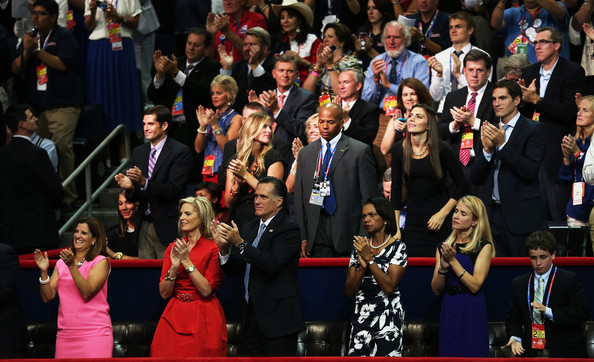
Give those Republicans some due credit: they’ve been putting on the kind of show that would have done Ziegfeld proud. Saddled with a vanilla nominee in Mitt Romney, they’ve been firing up their base with a multi-megawatt display of passion and purpose. And not only their base: the Republicans have jettisoned their dowdy image as the party of aging white guys; they’ve produced an array of stirring speakers who represent youth, ethnicity and womanhood… the future of America wrapped up in an attractive and exciting (yet still suitably conservative) package.
Back in my college days, communications scholar Marshall McLuhan gained a measure of fame for proclaiming that “the medium is the message.” In other words, what you say isn’t as important as how you say it… and how it comes across to your audience. So far, the 2012 GOP convention has excelled at skipping over the hard truths in the service of a lofty idealism that should play nicely on Main Street.
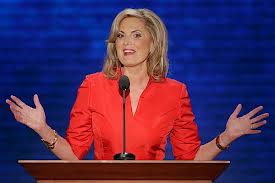 Ann Romney proved herself a powerful messenger as she forged an emotional bond with the wives of America. A decent and courageous woman who has suffered her share of hardships, she understandably overlooked the fact that some hardships are suffered a little more easily when your net worth is in the hundreds of millions. I have to wonder if a Romney presidency would grant less-privileged multiple sclerosis sufferers the kind of superior medical care that stabilized her own condition and allowed her to speak so passionately at the convention.
New Jersey Governor Chris Christie, never one to pull punches, delivered a rousing (if self-centered) sermon that credited his late mother with imparting his guiding philosophy in life: that it’s more important to be respected than liked. Aside from the questionable wisdom of that 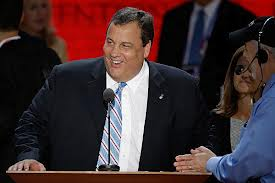 philosophy (I’d counter that a genuinely successful human being needs to maintain a fine balance between the two), it’s clear that Christie is elevating toughness to a virtue.
Toughness fits Christie’s “Jersey bulldog” image, and today’s Republicans respond to his kind of toughness. Not for them the wimpy bleeding-heart histrionics of Obama liberals. What does it matter if a Romney presidency adds to the burdens of the middle-class and working-class Republicans who will be voting for him? They can all revel in their toughness… and their dogged faith in a system that holds out the dangling carrot of success for everyone who makes the effort.
Former Secretary of State Condoleezza Rice is a magnificent woman and an equally magnificent speaker, qualities she demonstrated almost effortlessly during her dazzling convention speech. Orating without a teleprompter, she spun a vision of America as an “exceptional” nation that must continue to exert its leadership around the globe. Inspiring 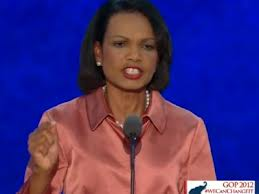 stuff, though my inner alarm system tends to start beeping whenever I hear the words “America” and “exceptional” in the same sentence. (Hitler’s Germany and Tojo’s Japan believed they were “exceptional,” too.)
Again, here was a morally questionable vision (neocon interventionism) couched in soaring rhetoric reminiscent of JFK’s inaugural address. Back in 1961, the young president promised that “we shall pay any price, bear any burden, meet any hardship, support any friend, oppose any foe to assure the survival and the success of liberty.” Alas, after our decade in Vietnam, a grueling war in Iraq and an interminable engagement in the wilds of Afghanistan, that kind of expansive idealism seems not only dated but fatally unsustainable. During an ongoing economic crisis at home, we simply can’t continue to bankrupt ourselves by policing the world.
I didn’t expect VP nominee Paul Ryan to be such a firebrand onstage. His photos tend to fit his reputation as a dorky policy wonk, but he had all the right stuff when he mounted the stage in Tampa. Animated, youthful and bold, he praised his mother’s work ethic, ripped 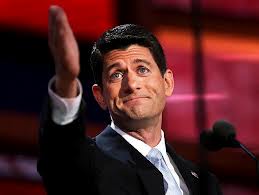 into Obama as a failed president, set the stage for Romney the turnaround wizard, and essentially anointed himself as the political standard-bearer for his generation.
Ryan also played fast and loose with the facts, as when he accused Obama of breaking his campaign promise to keep a struggling General Motors plant open. (Fact 1: Obama never promised to keep the plant open. Fact 2: It shut down while Bush was still president.) “We’re not going to let our campaign be dictated by fact-checkers,” harrumphed Romney operative Neil Newhouse. That’s right… just dole out the Kool-Aid and encourage all those financially strapped conservative believers to drink all they like. No matter that the Romney team would boost military spending during a budget crisis, roll back benefits for the poor and elderly, and shift even more of the tax burden from the rich to the middle class… it takes real patriotism (and toughness) to vote against your own interests.
And of course, all those inspired, idealistic and passionate speeches only made the Republican vision more lethally convincing across Middle America. Let’s see if the GOP nominee can strike a proper balance between image and truth when he steps to the podium for his big moment tonight.
Summer Rerun #3: Are Moderates Just Misfits?
Here’s the third and last of my summer reruns before we return to live action. I wrote this piece in December 2009, as you might guess from the first sentence below. It still rings true, unfortunately, because it’s tougher than ever to be a moderate in today’s pathologically polarized America. As for the moderate movement I sing about… well, let’s just say I haven’t lost hope.
As we enter the final month of the most demoralizing decade in recent memory, I think we moderates need to ask ourselves some critical questions about our place in the world. Don’t worry about the answers. Right now it’s more important to ask the questions than to answer them (though you’re invited to supply us with any solutions that pop into your head).
If you’ve noticed the title at the top of this page, you already know my first question. Are moderates just misfits? Have we crash-landed in our lonely, uncharted, unregarded territory only because we couldn’t land anywhere else? Are we pariahs on the political scene? Do we really know what we believe, other than the fact that we can’t buy what the right-wingers and left-wingers are peddling?
This past weekend I had dinner at the home of a couple I like and respect. Both the husband and wife fit comfortably in the “NPR liberal” mold: they’re ardent vegetarians and members of the local food co-op… they send their two kids to a progressive private school that refuses to grade its students… they donate books to the poor. They’re good and generous people.
When I told them I had launched a blog for moderates, the wife was incredulous. “Do moderates believe in anything?,” she asked in earnest.
I reached deep into my hat and produced the obligatory white rabbit. We moderates believe in restoring a sense of balance, I told her. When we see the boat tipping to one side, we feel an instinctive need to tip it the other way. I said we support “the greatest good for the greatest number,” employing that hoary utilitarian catchphrase in all its sweeping vagueness. I added that our views are flexible and prone to shift over time; a moderate on race relations half a century ago would sound quaintly conservative (if not downright bigoted) today.
So yes, I supplied my friends with answers… but were they satisfactory answers? Did my impromptu apology for moderation give us a recognizable shape, a brand, a credo on which we could build a movement? I’m not sure. I’m afraid my answers gave the impression that we moderates have no fixed values of our own… that we exist primarily to foil those wicked extremists.
I did a little soul-searching after that dinner. I found it interesting that I’m both a longtime moderate and a longtime cynic (although less of a sneering, hard-boiled cynic than a disgruntled idealist who secretly clings to his ideals). I wondered if the two states of mind could be related. A cynic, after all, is inclined to be skeptical of all human certainties. So is a moderate.
I’ve tried to pry myself into the ideological hiking boots of the left, and I’ve attempted to squeeze into the glossy wingtips preferred by the right. Neither pair fits, so essentially I’ve had to cobble my own footwear. Maybe you’ve had to cobble yours, too.
Until now, we moderates have had no lodestars to light our way… no moderate magazines, or moderate activists, or larger-than-life moderate heroes immortalized in statues, verse or TV miniseries. Nobody knows what we stand for, including most of our own tribe, and until now we’ve been content to be left out of the public debate. We’re misfits, all right.
Then I had a minor revelation: in a society gone berserk, being a misfit is a gleaming, 24-karat badge of honor. We moderates swear allegiance to no rigid ideologies, bow at the feet of no preening potentates, drink no Kool-Aid before its time. In short, we own our souls.
We’ve been marginalized, yes… but we’re also free. Free to oppose special interests, with all their willfully self-serving hidden agendas. Free to speak out against coercion, censorship and chicanery. Free to shout “Humbug!” when we observe humbug in our midst.
Odd, isn’t it, that thoughtful moderates have so much in common with thoughtful cynics. We’re misfits, renegades, knights-errant battling windmills. And we get no respect from the safely entrenched insiders. Milquetoasts, are we? Timid and noncommittal? I don’t think so. We’re in good, robust company.
Give us a little time, and we’ll build a movement. We won’t be marching in lockstep; that’s not our way. But we’ll be moving… moving to the center of American political life where we’ve always belonged. Care to join us?


 THE NEW MODERATE